
Self‑care is one of the hardest skills for neurodivergent people to learn. Many neurodivergent people struggle to notice what their bodies need — hunger, thirst, movement, comfort, hygiene, or sensory relief can all feel confusing or overwhelming.
As an autistic and ADHD adult, I will notice my mood changing long before I realize my body needs “human” care.
Self-care is such a vague term, and I don’t think anyone ever takes the time to explain what it means.
Self-care isn’t just saying “love yourself” and you are done. In reality, it’s all the little actions you take day to day to take care of yourself.
Your needs depend on you are a person, but many things fall under self-care.
- Exercise
- Hygiene
- Comforting pain
- Sensory comfort
- and so much more!
But when you are autistic, it can be hard to sense these things. How are you supposed to know brushing your head reduces itchiness if you don’t even know what the buzzing on your skull means?
By manually practicing these skills, we can slowly but surely become more used to doing self-care activities and develop body awareness of how our bodies feel.
What is the Helping Hands Creations solution to learning self-care?
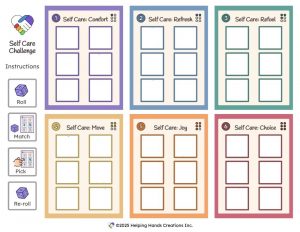
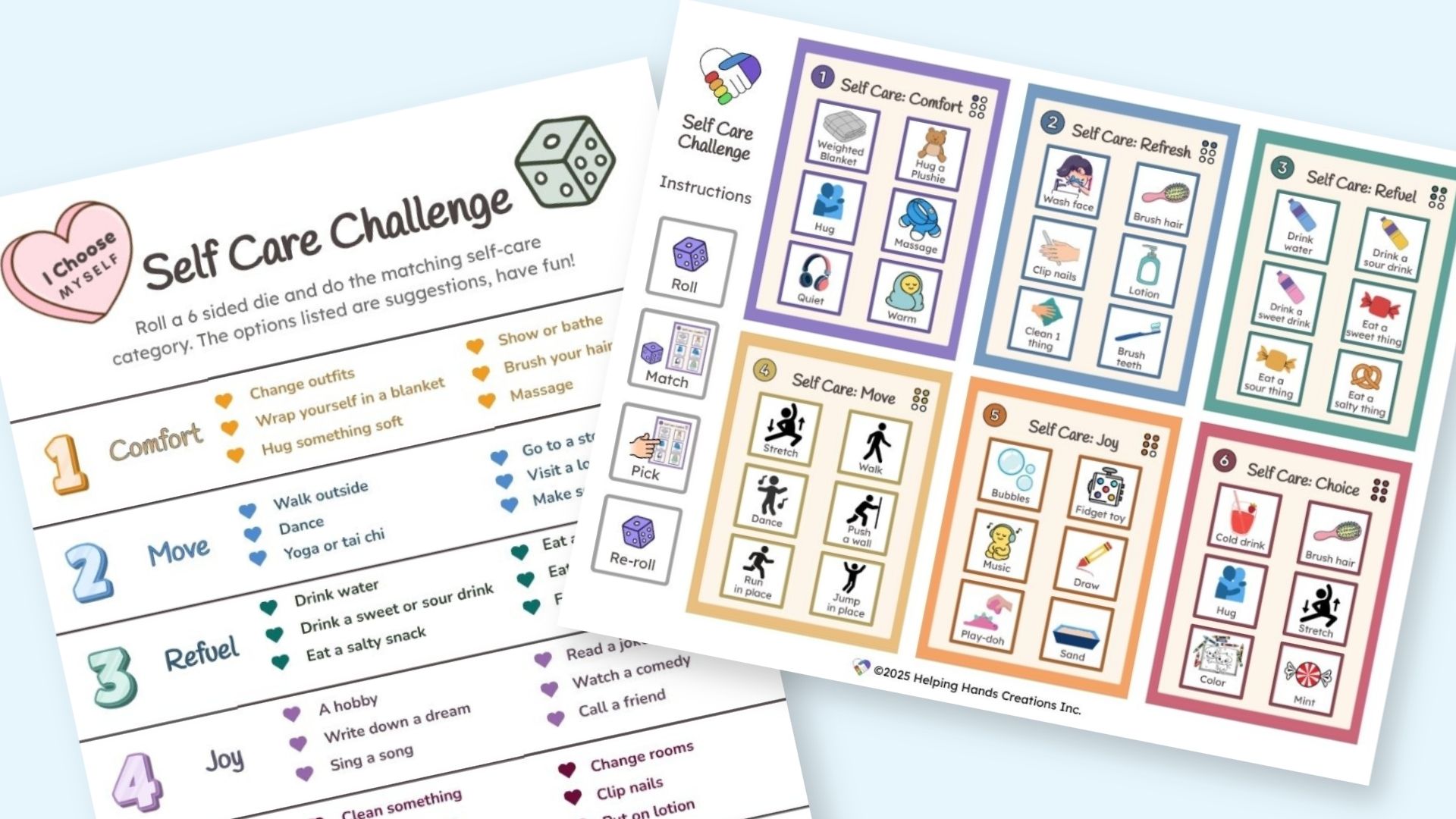
We created a free Self‑Care Game!
The game uses simple categories and clear examples to help try small actions, notice how our body feels afterward, and slowly build confidence in caring for ourselves. You just roll a die and do an action from a category that matches the number you got on the die.
In the game, you have 6 categories:
- Comfort: physical comfort through texture or pressure
- Move: physical movement
- Refuel: drinking or eating different tastes to both nourish the body and engage your sense of taste
- Joy: different hobbies that are known to produce positive engagement
- Refresh: hygiene focused tasks or cleaning your space around you
We designed this self-care game to help explore and practice different types of self‑care in a fun, low‑pressure, and predictable way.
Why Practicing Self‑Care Matters
Self‑care isn’t just “loving yourself.” It’s all the tiny actions we take to help our bodies feel safe, comfortable, and regulated. For neurodivergent people, these actions often need to be taught, repeated, and explored over time. Practicing self‑care through play helps us learn:
- What comfort feels like
- How movement affects our body
- How hygiene supports regulation
- How sensory tools reduce overwhelm
- How refueling changes energy levels
These experiences build body awareness and emotional resilience — skills that support independence throughout life.
How the Game Helps
The game gives a simple way to explore different self‑care actions. By making it predictable and simple steps, we took the stress out of self-care in this game.
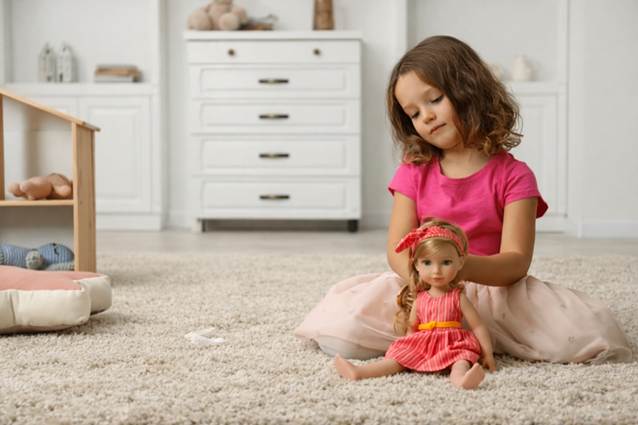
For anyone who may not be ready to try the tasks on themselves, practicing with a partner or with a stuffed animal friend is also a great way to help build the skills and routine needed to become ready.
Download Your Free Self‑Care Practice Game
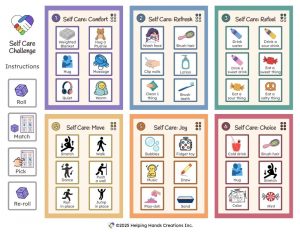
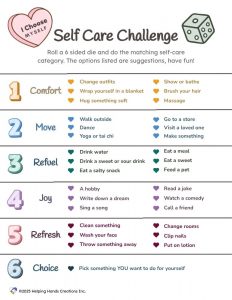
Below are different versions of this game. We have a visual version and a text-based version of this game.
We also included a template to build your own visual version!

We hope this resource makes learning self‑care a little easier, gentler, and more playful for anyone in need of self-care guidance.