
Meltdown Planning Makes a Difference
One of the most frustrating parts of having meltdowns is how unsupported it feels to suffer through them.
Meltdowns are painful, humiliating, and impact every relationship in your life. They affect your home life, work life, and social life in ways that can feel impossible to explain to people who don’t suffer from them.
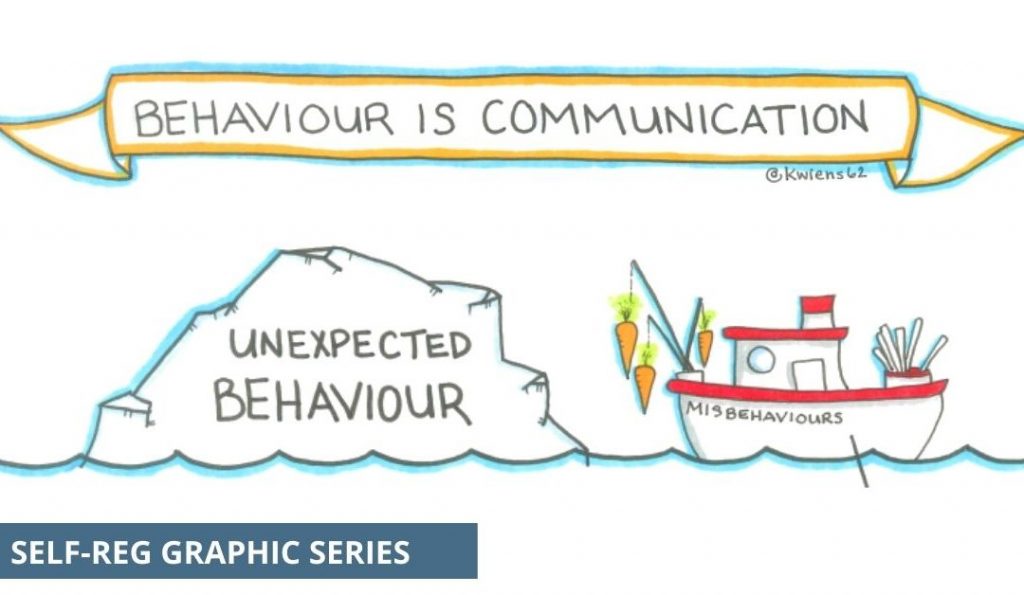
Yet many people still mistake meltdowns as a behavior issue rather than what they truly are: a medical one.
What is a Meltdown?
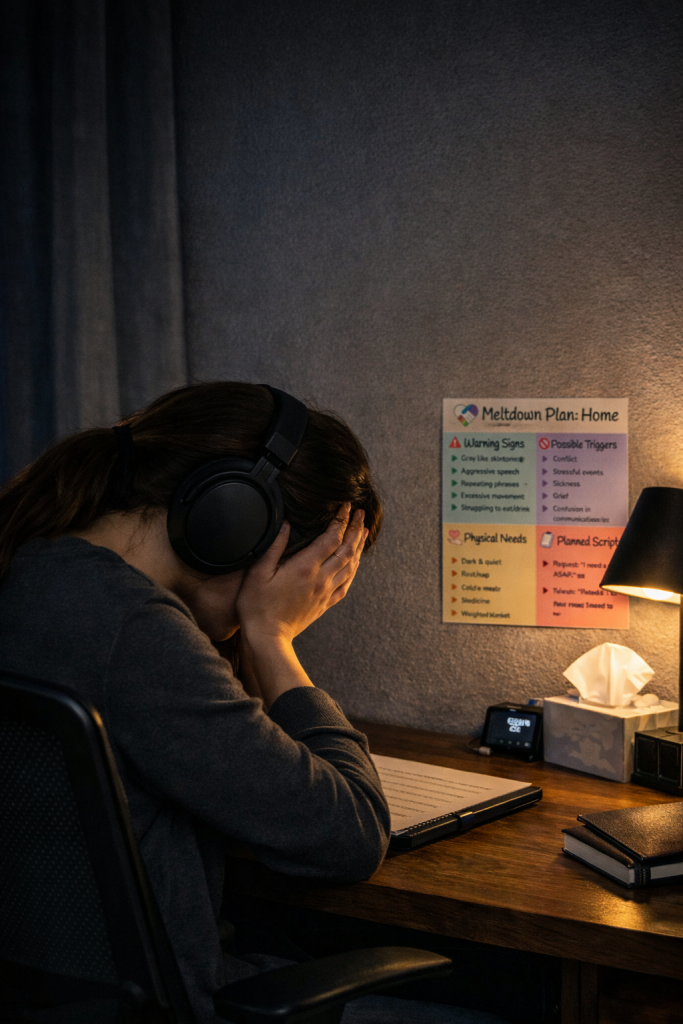
A meltdown is your nervous system rebelling against its environment. It’s your body signaling that you are not okay and that every sensory input—talking, lights, sounds, movement—is suddenly painful and overwhelming.
Despite the physical reality of these episodes, meltdowns are rarely treated as a physical issue, even though the evidence clearly shows how much stress they place on the body.
This is why meltdown planning makes a difference. It acknowledges your pain as real and something that deserves to be prevented.
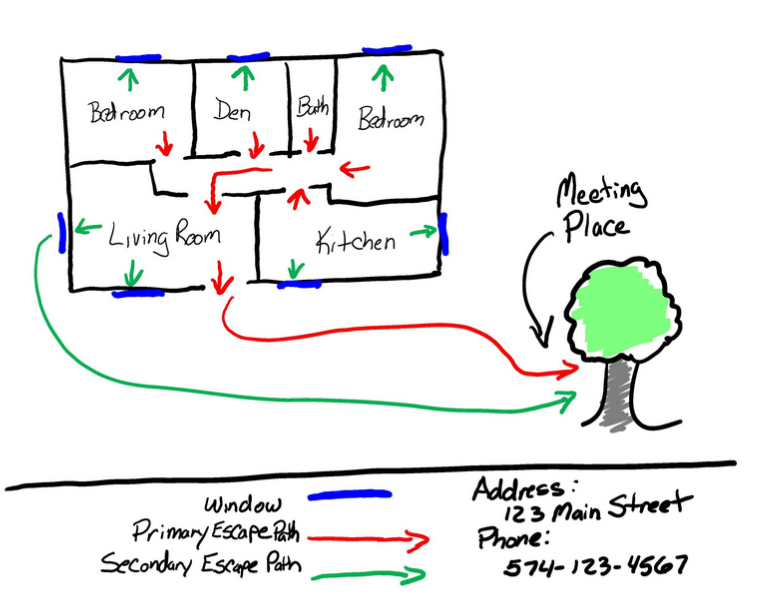
Just as we create fire escape plans or hurricane safety plans, we can create meltdown plans to minimize the impact these episodes have on our daily lives.

What Is a Meltdown Plan?
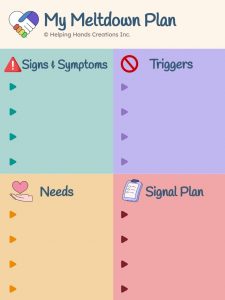
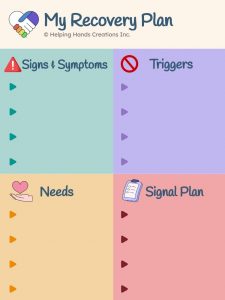
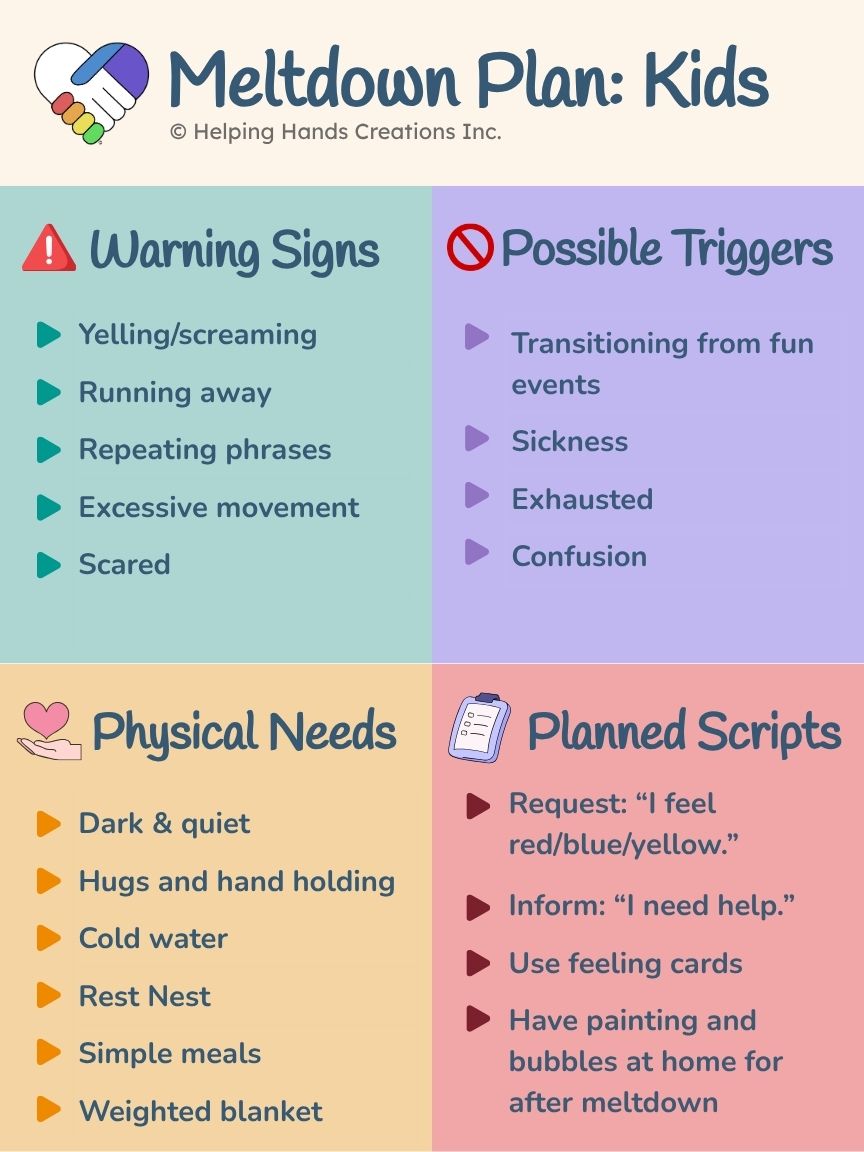
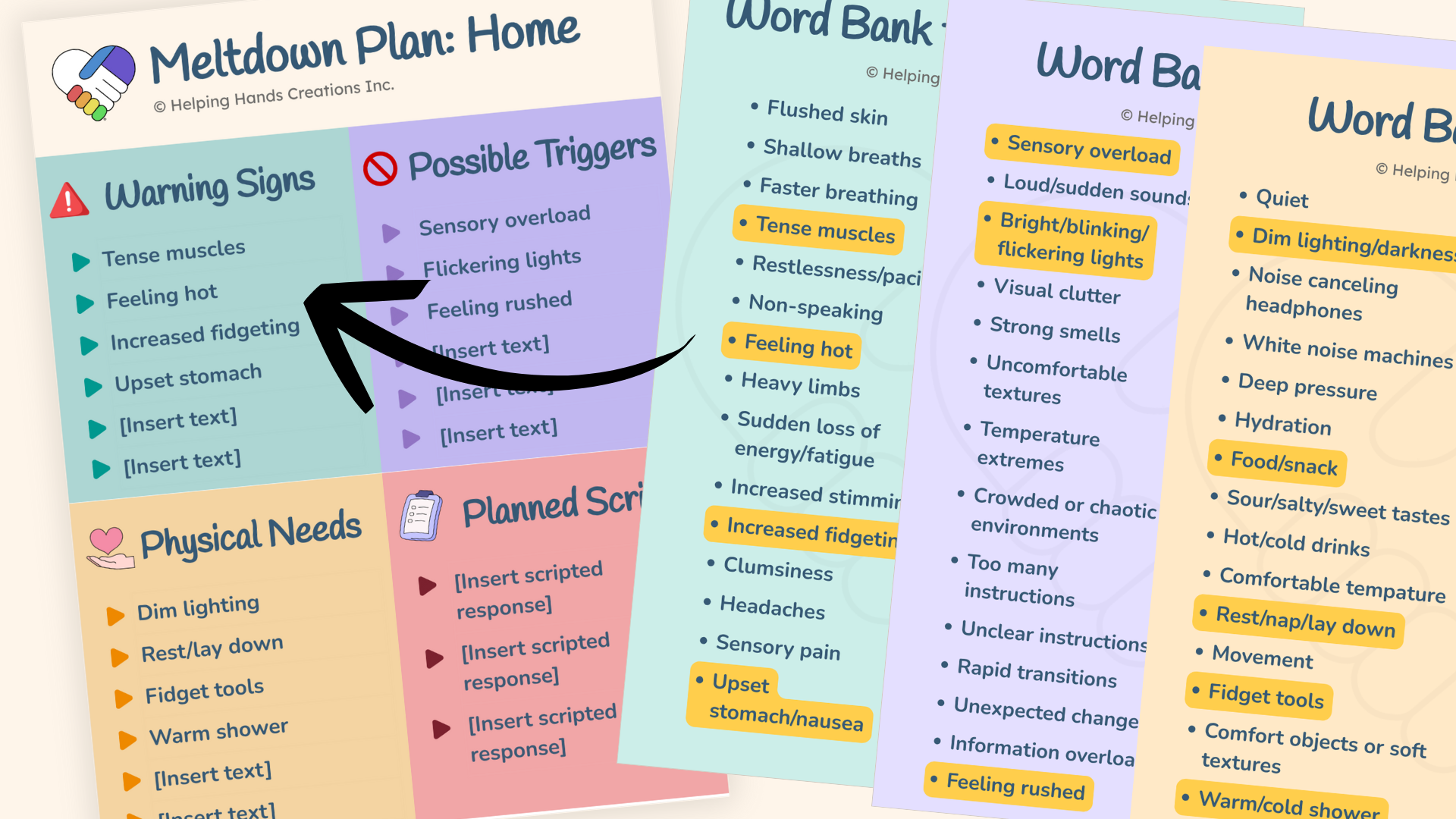
A meltdown plan is created by reviewing past meltdowns and, through trial and error, identifying four key areas:
- Signs and symptoms
- Possible triggers
- Immediate needs
- Safe exit signals
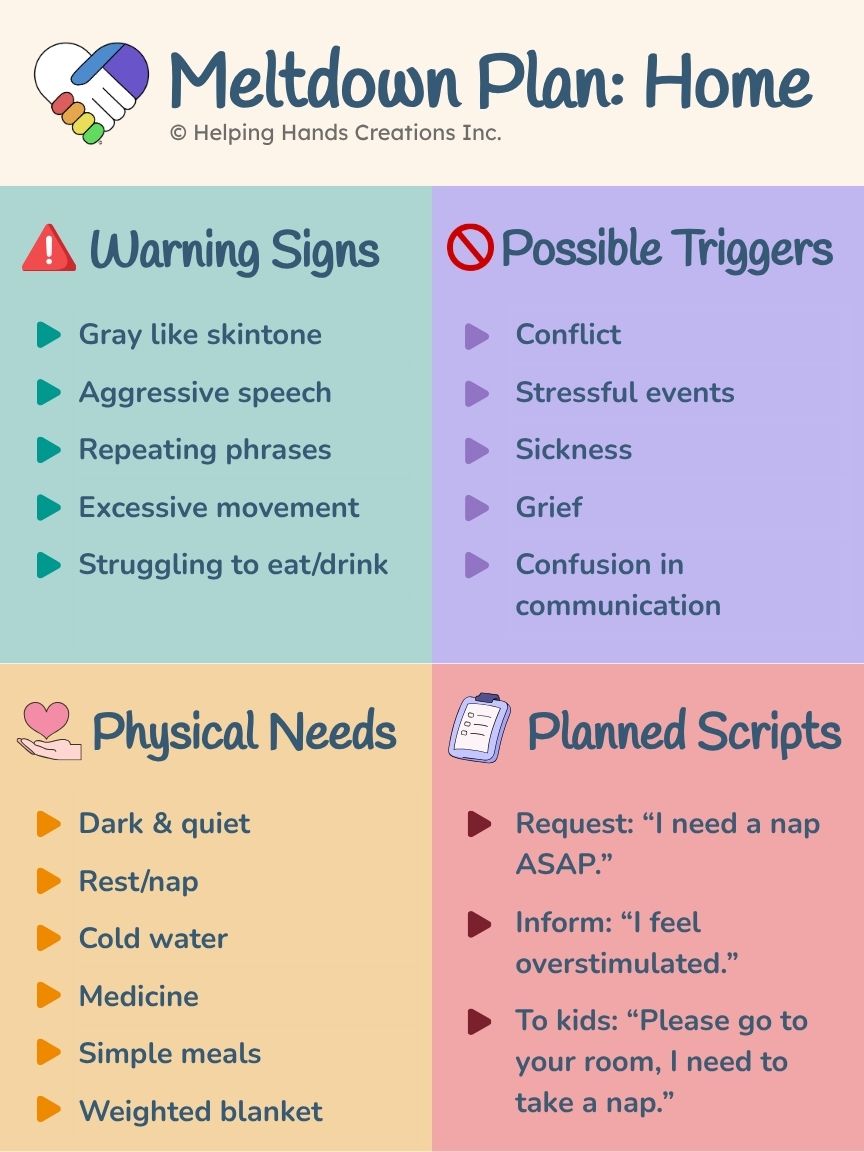
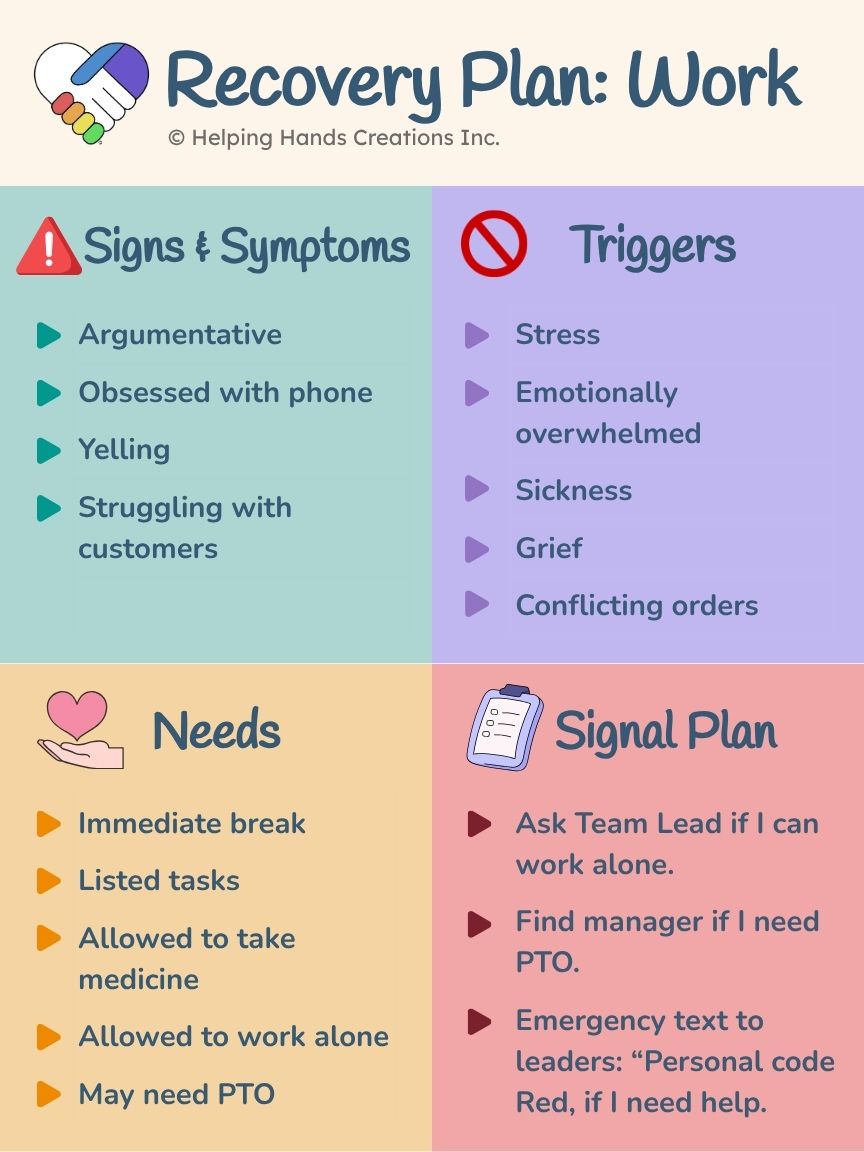
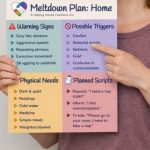
A meltdown plan must be place‑specific and adjusted over time. A plan for home will look very different from a plan for the workplace, where options may be limited.
For example, my holiday meltdown plan is texting anyone who needs to know that I’m leaving immediately, while my home plan may simply be taking a reset nap.
Benefits of Meltdown Planning helps:
- Lower the intensity
- Lower the frequency
- Shorten the recovery time
Meltdowns may never disappear completely. But you can reduce their amount to the point that it feels easier and less stressful to support yourself though them when they do occur.
How to Fill Out Each Section
Each section includes a word bank with examples, but ultimately, this is your p lan. If a term doesn’t fit, replace it.
Reflect on past meltdowns and consider what helped, what didn’t, and what could have changed the outcome.
If you feel comfortable, asking a trusted family member or friend for perspective can reveal patterns you may not notice yourself. Outside perspective can be difficult to hear, but it often provides valuable insight.
Use these guiding questions:
- Signs & Symptoms: “How does my body and mind feel before or during a meltdown?”
- Triggers: “What forces outside my control negatively influence my mood?”
- Needs: “What helps my body and mind calm down and recover?”
- Signal Plan: “How do I safely let people know I need support immediately?”
Tips for Building Your Personal Plan
- Keep your plan place‑specific: Consider long‑term consequences and how others may perceive your plan—this keeps you safer.
- Your medical information is private: you never need to disclose diagnoses. You can choose to call it a “recovery plan” when sharing with coworkers or authority figures. A simple “I need this for a medical condition; I can provide a doctor’s note if needed” is enough.
Final Thoughts
Meltdowns are a physical response, not a behavioral problem. Planning ahead is essential, just like any medical emergency plan. I have POTS (a fainting condition), and my meltdown plan and POTS recovery plan are almost identical, even if the consequences differ i.e. meltdown vs fainting.
Needing a plan isn’t “over‑exaggerating.” If you need it, that’s what matters. Your health and happiness matter.
. . . . . . . . . . . . .
We also offer a free Meltdown Plan PowerPoint, a free YouTube video teaching our method in more detail, and our article packed with tips summarizing our method.