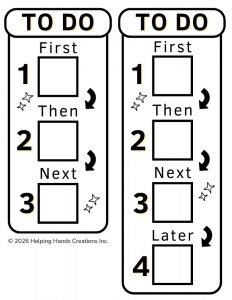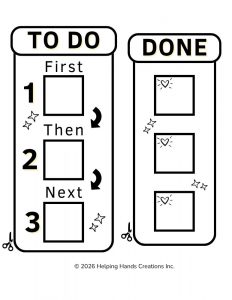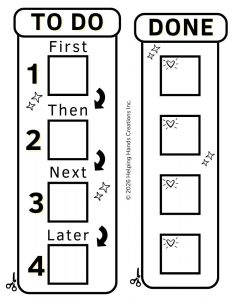

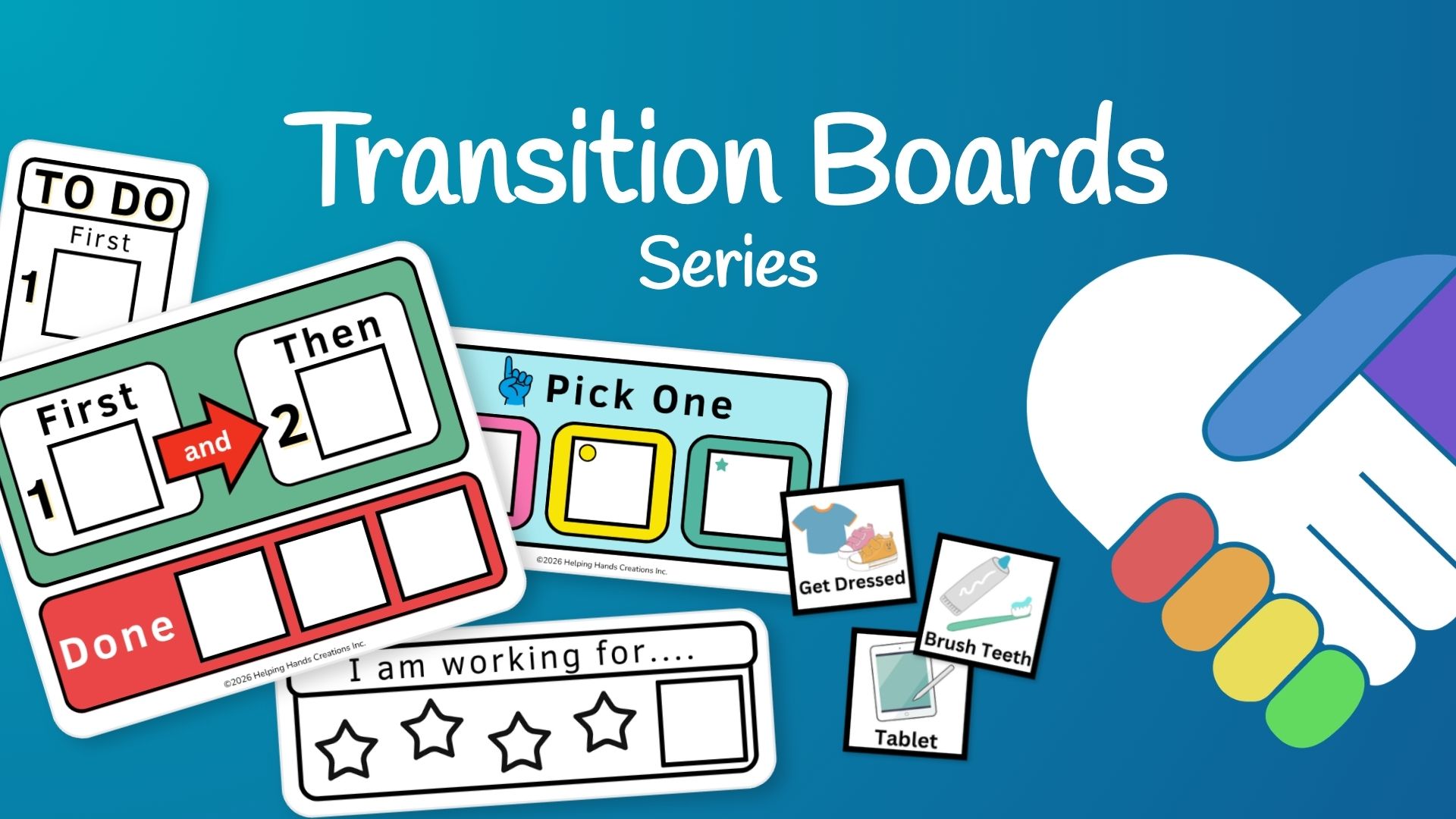
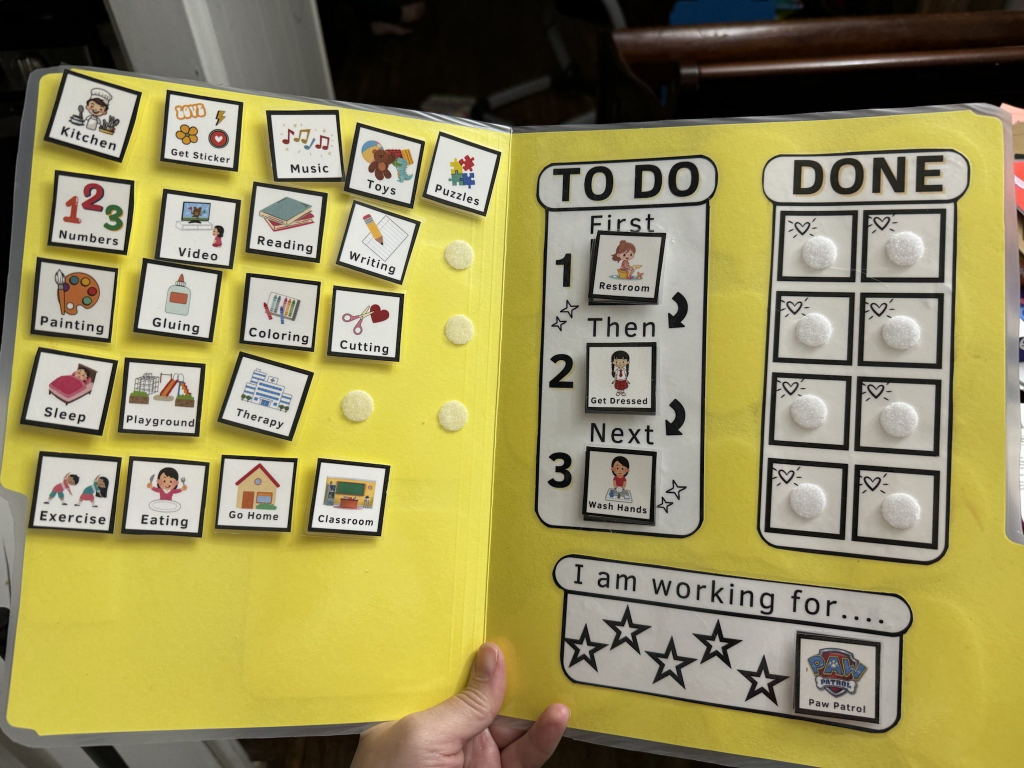
When I made my daughter’s communication board, we actually started off with a To‑Do list rather than a “First and Then” chart.
Although she was “verbal,” she still struggled when there was too much chaos around her. Having visual confirmation of what was happening and what would come next gifted her calm and independence.
So, it hurt when her school refused to use her To‑Do list. They didn’t understand it wasn’t a behavior tool. It was a communication tool.
When there’s so much going on in her day‑to‑day life at school, her communication folder with her To‑Do list was the lighthouse in a storm. Adults may want to discourage visual tools like the To‑Do list when a child is verbally communicating.
But that is only part of the solution. It doesn’t matter if a child has the ability to speak if it’s the anxiety and distress of the tasks coming that is the problem.
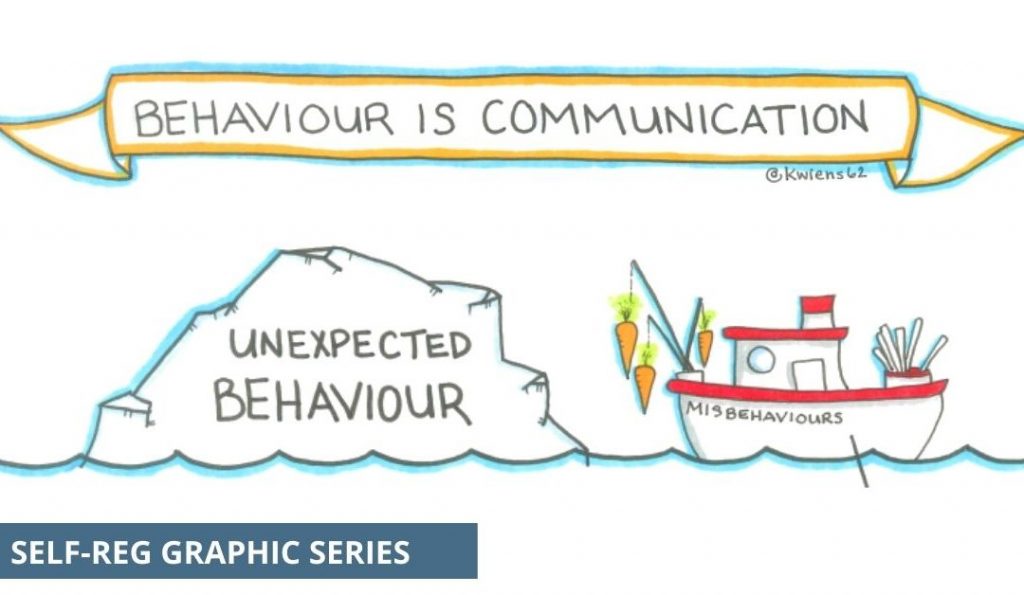
To‑Do lists are a physical representation of what is happening now and what will happen later. All behavior is communication; when you look at it through that lens, it’s not about what the verbal level of the child is.
It’s about supporting a child through the day and using a visual tool to help give them confidence and lower anxiety by giving them a visual map of what’s to come.
Why To‑Do Lists Help Neurodivergent Learners
To‑Do lists support skills that many neurodivergent children are still developing:
- Sequencing: What comes first? What comes next?
- Working memory: Remembering steps and using a tool to write them down.
- Task initiation: Getting started and gaining independence.
- Emotional regulation: Reducing anxiety about the unknown.
- Independence: Checking off tasks and seeing progress.
A To‑Do list is not about “doing more.” It’s about using a tool to navigate their daily life.
When a child can see the plan and see the steps play out as they were planned, it develops trust in the adult guiding them.
When they trust the adults leading them, they can move through the day with more confidence and less fear.
How To‑Do Lists Build Communication Confidence
Visual communication is still communication — and for many neurodivergent children, it’s what they depend on. A To‑Do list gives children:
- A voice when spoken language is hard
- A method to show they understand
- A tool to ask for help (“I don’t know this one”)
- A script to advocate (“Can we do this one first?”)
- A predictable way to participate in planning (“I want to add drawing”)
To‑Do lists reduce misunderstandings between adults and children.
Instead of relying on verbal instructions that get lost due to memory, attention, or daily chaos, the list becomes a shared language — something both sides of the conversation can physically track.
Building Routines Through To‑Do Lists
Many neurodivergent children appear to “prefer” unscheduled time because they become distressed during transitions or routine changes. But in reality, the lack of predictability creates anxiety, not comfort.
Unstructured time can feel like:
- “What’s happening next?”
- “Am I missing something?”
- “Is something about to change?”
- “I can do whatever I want.”
A To‑Do list gently answers those questions.
It shows the child:
- What the day looks like
- What is expected
- What is optional
- What is finished
- What is coming next
This builds trust → Trust builds confidence → Confidence builds resilience. And resilience helps them move through the day without feeling overwhelmed by every transition.

Practical Tips for Using To‑Do Lists Effectively
You don’t need a complicated system. Consistency and simplicity make To‑Do lists work.
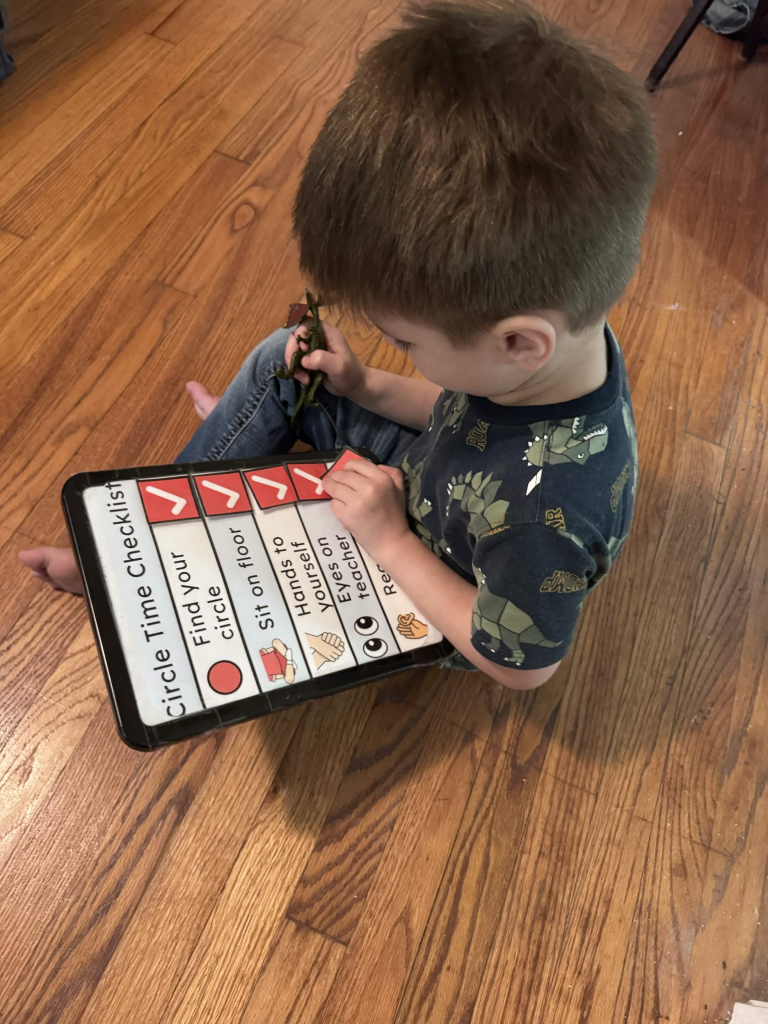
- Use clear visuals. Photos, icons, or drawings your child recognizes. Only use realistic photos if they are visually clear and easy to comprehend.
- Break tasks into small steps. “Clean room” is too big. “Pick up clothes” is manageable. It’s okay if you need to do many small steps with breaks.
- Limit the number of items. Stick to 3–4 tasks at a time. Do check‑ins for snacks, drinks, restrooms, or even stretching in between.
- Include breaks. Rest is part of the routine, not a reward. It’s important to weave breaks into their day so they don’t ignore their bodies as adults.
- Let the child help build the list. If the child struggles with anxiety, being part of the planning process builds trust.
- Check off items visually. Moving icons to the “done” section; using reward sections if you use one.
- Narrate calmly and factually. “Here’s our plan for today.”
- Celebrate progress. Not with physical rewards — with connection. High fives, smiles, or gentle praise. Communicate your pride in them.
A To‑Do list should feel like a guide, not a demand. It’s a support tool, not an argument.

Common To‑Do List Mistakes
To‑Do lists are simple, but it’s easy to accidentally use them in ways that create more stress on your child and you.
- Adding too many tasks. Keep the list short and simple.
- Making tasks too vague. “Clean room” is unclear. “Pick up toys” is clear.
- Not marking progress visually. Neurodivergent learners need to see completion. Use the “Done” section.
- Expecting independence too quickly. To‑Do lists require scaffolding. Start together. They will participate more as time goes on.
- Using the list only during meltdowns. Visual tools work best when practiced during calm moments. They have to be “ready” in order to progress in learning.
- Changing the list without warning. Predictability builds trust. Sudden changes break it. They may see it as lying or tricking them.
Avoiding these pitfalls keeps the To‑Do list what it’s meant to be: a communication tool, not a tool to demand work out of them.

The Heart of the Practice
To‑Do lists aren’t about productivity. They’re about safety, trust, and understanding.
When you use visual communication, consistent routines, and emotionally safe environments, you’re not just helping a child complete tasks. You’re helping them navigate a world that often feels too loud, too fast, and too confusing.
You’re giving them tools that make life feel understandable and that support becomes the foundation they stand on as they learn, grow, and thrive.