
When completing a task, it can emotionally be a whirlwind to suddenly stop what you were previously doing.
While I’m sure most people can relate to this sudden emotional shift, I don’t think your average person can quite relate to the neurodivergent experience of it.
Many of us who are neurodivergent physically feel our emotional responses. What to others is a slight disappointment may instead feel like: stomach pain, nausea, or painful pins and needles on our skin to a neurodivergent person.
Our sensory systems and bodies are a lot more connected to our emotional regulation than your average person can relate to.
What may look like “over‑exaggerating” to an outsider is completely normal to someone in the neurodivergent community. The physical cringe of thinking about touching microfiber or watching an embarrassing scene on TV can feel painful. That may seem odd, but that’s our reality and is just a different way of experiencing life.
So, is it any surprise that when we are finishing tasks, we can go through an array of emotions and physical responses?
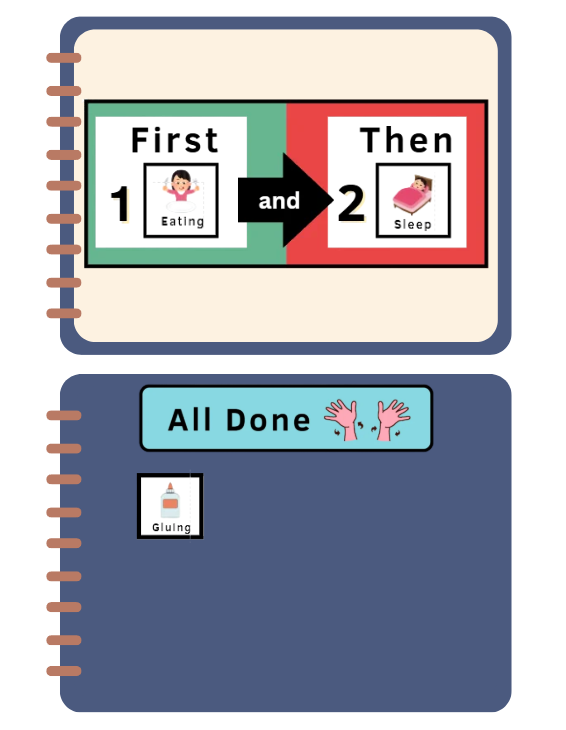
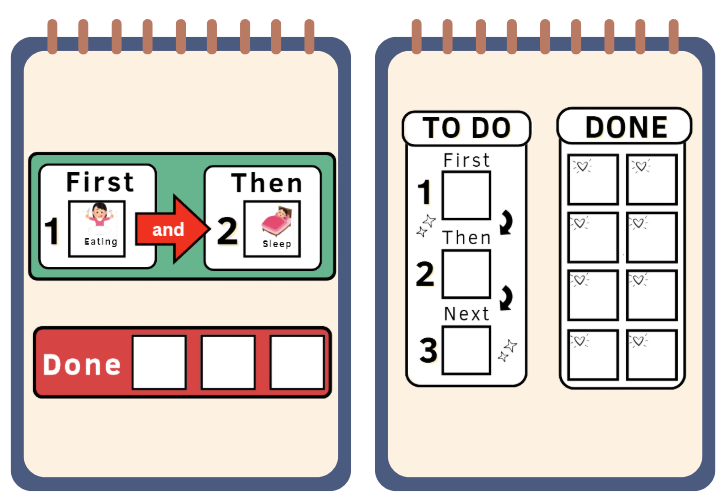
Flexibility Towards Our Needs is an Accommodation
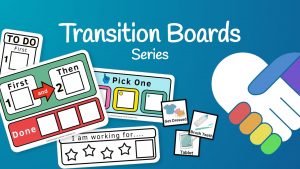
That is why, when creating rewards for our mix‑and‑match transition board series, I wanted to make sure that guardians and professionals had options.
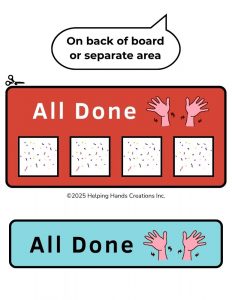
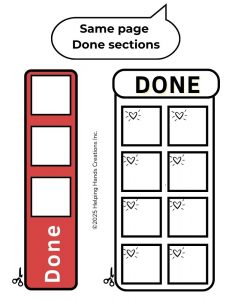
In the downloads below, you have two main types of “done” sections:
- Ones that can be placed beside the transition board
- Flexible placement options that can be placed on the back of a board
I did this in case some students feel triggered looking at events they already completed.
It’s not helpful if the student is still working on transitions and becomes distressed every time they remember the task that ended two turns ago.
It is not a weakness — it’s communication. It’s their way of showing they need flexibility.
If you are ever struggling with a student using a transition board and notice that it may be related to seeing past tasks, consider keeping the “done” section on the back of your board.
They are still practicing moving the task to “done”; they are simply moving the tasks out of sight afterwards.
Working on transitions is only successful if they leave remembering the predictability and the confidence in their trust of the board. If they leave the activity distressed, it sets back your progress.
I hope today’s resource helps you in your journey.