
By a former special education teacher, AuDHD adult, and parent to neurodivergent kids.
Note from the Author
While I am going to be writing this blog post using my professional background in special education, it is also from personal experience, so this is a dear topic for me.
To give this article the care and consideration it deserved, I co-wrote it with an expert who brings both personal and professional experience with speech barriers and AAC.
Claire Lovelace is a licensed special educator and assistive technology professional. She is also an autistic self-advocate and part-time AAC user.
I hope this article helps bring understanding, hope, and assurance that AAC doesn’t hinder progress, but rather makes it possible.
What counts as communication?
Communication is more than verbal speech. It’s how we express ourselves and share who we are. From the words we choose, to how others understand our words, communication is a two-way street with shared experiences.
But, what if someone’s speech isn’t a perfect reflection of who they are?
Just as communication is built from many aspects, there are many ways it can break down. No matter how or why the breakdown happens, it impacts how someone experiences life.
While there are many methods to support speech, using communication tools is often viewed as a last resort.
It doesn’t make someone stronger to continue letting them struggle. [Assistiveware Article: source]
Learning is still possible, but it doesn’t mean it’s effective or kind to force someone to learn while distressed. Much of the energy they are using to survive could have been used instead to support growth.
Technology and support tools aren’t giving up on the learning process —rather, they make progress possible.
It is often difficult to catch communication struggles because of how different challenges can be in different people.
Often when words fail, behavior becomes the next option in communicating. Behavior resulting from a lack of communication means fewer safe classrooms, more stressed students and staff, and less time for engagement and learning.
Behavior can be an indicator of what they want or need, but without guidance, it can be hard to decode the behaviors to identify needs to properly give support.
This is why I will present barriers that cause these behaviors.
In this article, I will:
- Explain what AAC means.
- Identify several types of communication barriers.
- Discover how barriers fluctuate in severity, layer, or change over time.
- Explore how AAC tools remove barriers and support communication development.
Related Article: How to Build a Neurodivergent Friendly Toolbox
What is AAC?
AAC stands for Augmentative and Alternative Communication. It is a catch- all term to describe the many types of ways we communicate that can be used alone or with verbal speech. [Augmentative and Alternative Communication (AAC) Overview source]
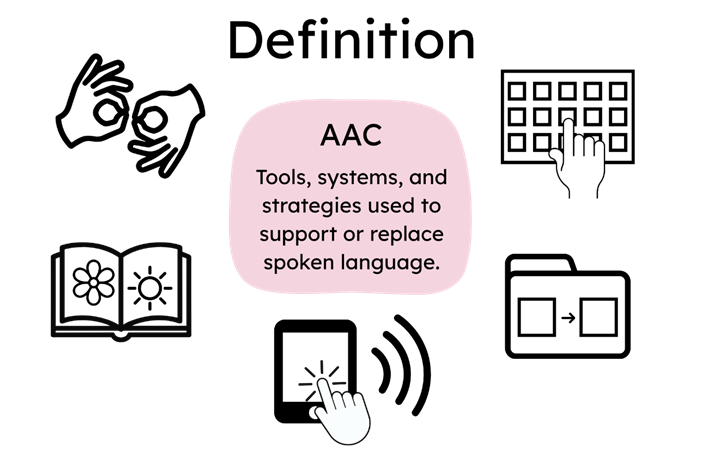
AAC tools strengthen different avenues of communication. AAC tools do not have to replace speech. Rather, they strengthen other forms of communication to meet the needs of the user. [What is AAC? source]
How do you know if you need an AAC tool?
AAC tools are used to overcome barriers. If there is a tool that can overcome a barrier, why would you continue to struggle instead of using a tool?
Have you ever texted someone who was far away? The barrier was the distance, and you overcame it by using your phone.
We all use AAC without realizing it because speech has never been our only form of communication.
However, some people need to use AAC because they cannot communicate everything they wish to say with verbal speech. That is when AAC tools become a necessity to access communication. [Why the Communication Bill of Rights? source]
What Barriers do AAC tools address?
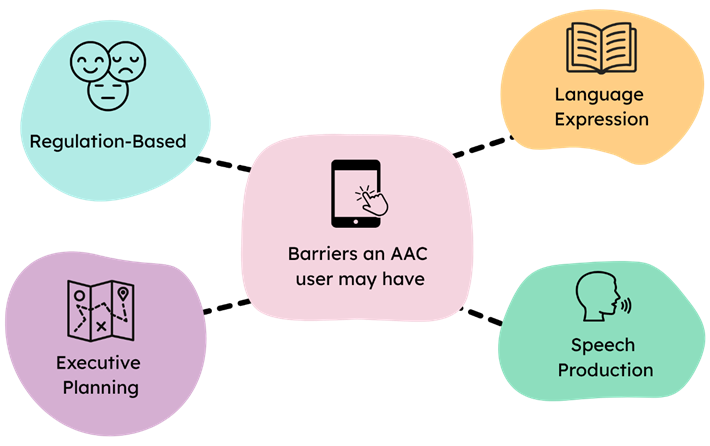
While there are many types of barriers that impact communication, today I am focusing on explaining 4 types of common communication barriers I have seen as a teacher. My focus is also inspired by an article written about AAC user profiles. [Intermittent, unreliable, insufficient, and expensive speech source]
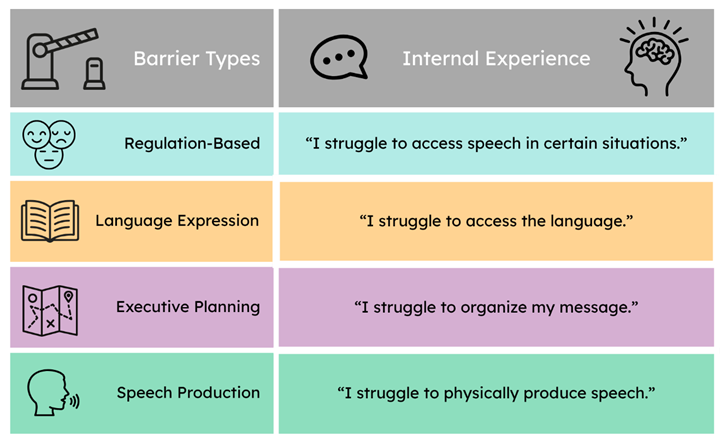
As noted in the chart above, I am addressing 4 different types of barriers found in potential AAC users.
Their speech may be impacted by:
- Regulation-Based: emotional state
- Language Expression: limited access to words, phrases, or context
- Executive Planning: planning conversational flow and rhythm
- Speech Production: physical navigation skills for speech
The severity of each barrier is a spectrum. You can have multiple barriers that layer. You can struggle with a Regulation-Based barrier sometimes while frequently struggling with an Executive Planning barrier. A verbal student may experience communication barriers and still need AAC support to help them reach communication goals.
The frequency of incidents, intensity of the barrier, and potentially layering of barriers can increase the severity of stress the user experiences when attempting to communicate.
It is also important to note that stress, health, and environmental causes can impact the degree of severity of their experience.
If the user suddenly lessens or gains barriers, it does not automatically mean it was or is a behavioral problem. Barriers have the potential to change the user’s experience.
Use of AAC tools may increase or decrease over time due to the situation. Instead of focusing on decreasing tool usage, I highly recommend focusing on removing communication barriers.
Tools take extra steps by the user. If they are putting in the extra effort to use the tool, chances are the tool is meeting a need and helping to overcome a barrier.
By removing barriers through tools, strategies, and accommodations, you are helping the user build strength in their communication skills.
It then becomes possible to strengthen all communication paths and reach the ultimate goal of understanding and being understood.
Let’s dive into each type of barrier and investigate the different ways they impact users.
Regulation-Based Communication Barrier
“My words are stuck because it’s too much right now.”
The words are in their thoughts, but emotional, sensory, stress-related, cognitive, or situational demands make spoken communication difficult or temporarily unavailable.
The barrier is internal, even if it was caused by external events.
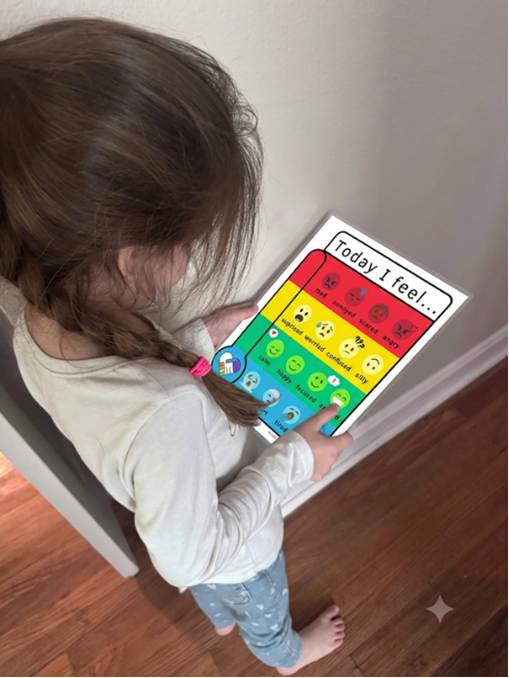
What does it feel like?
When those with a Regulation-Based barrier try to explain their difficulties, you will often hear them say:
- “My words just won’t come out.”
- “My words feel stuck.”
- “Can we text instead?”
- “I know what I want to say.”
- “Please give me a minute.”
These statements are not attempts to try and avoid the conversation or add difficulty to the situation; this is a statement about how the barrier feels for them.
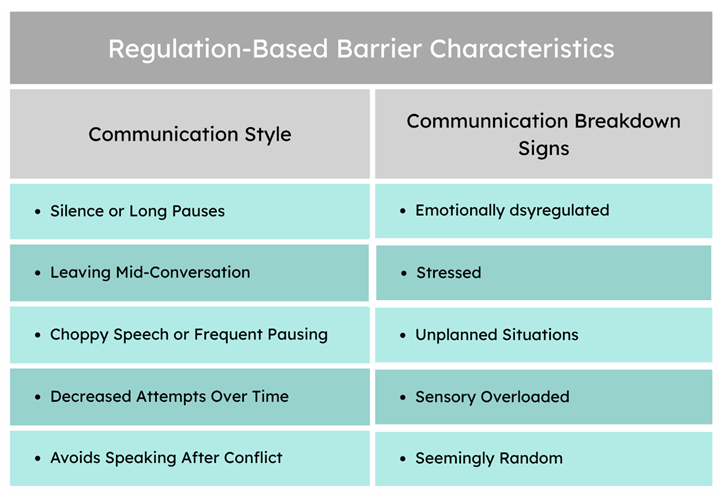
Why AAC Helps
People who experience a Regulation-Based barrier often know exactly what they want to say but can’t access speech temporarily due to different stressors.
AAC at its core is an expanded path to communicate. Instead of forcing speech when it’s difficult or accepting communication shutdowns, you can instead access an AAC tool.
Even if an AAC tool is used only occasionally, having it available reduces anxiety, provides a reliable plan, and increases confidence in conversations. It is safety, not fear, that inspires courage to keep moving forward.
A Day in Their Shoes
Imagine you are having an important conversation with a loved one.
You know what you want to say, but your words come out choppy and with constant pausing.
Your loved one is frustrated at your sudden inability to speak as you normally do. They begin to question why you are struggling now when you seemingly were able to speak moments before.
You try explaining writing would help, but they misunderstand and think you are not trying. Eventually the conversation ends —not because you had nothing to say, but because you feel unheard, hurt, and discouraged.
In your moment of distress, your needs were dismissed because your struggles were mistaken for behavioral problems instead of a genuine speech barrier.
After your argument runs its course, you are nervous to talk to your loved one. Your trust in them was hurt because they didn’t believe you.
Helpful article by AssistiveWare: How to be a Respectful Communication Partner
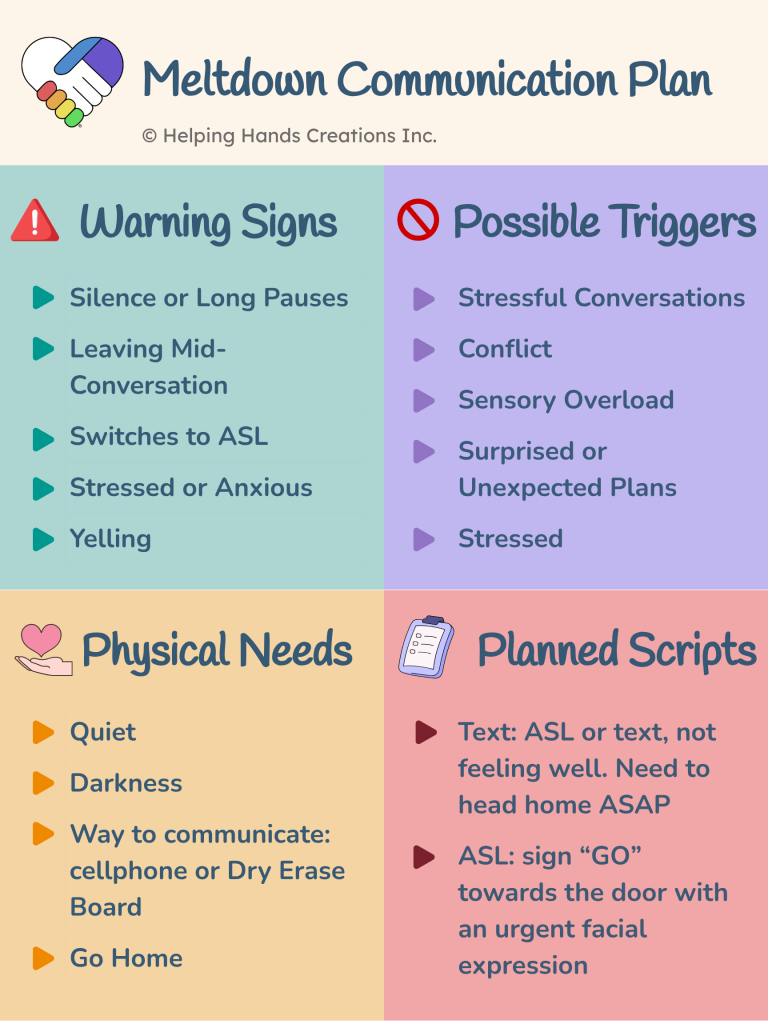
Make your own meltdown plan by using our Free Meltdown Plan Template
Language Expression Barrier
“I can speak, but my speech cannot always be understood by others.”
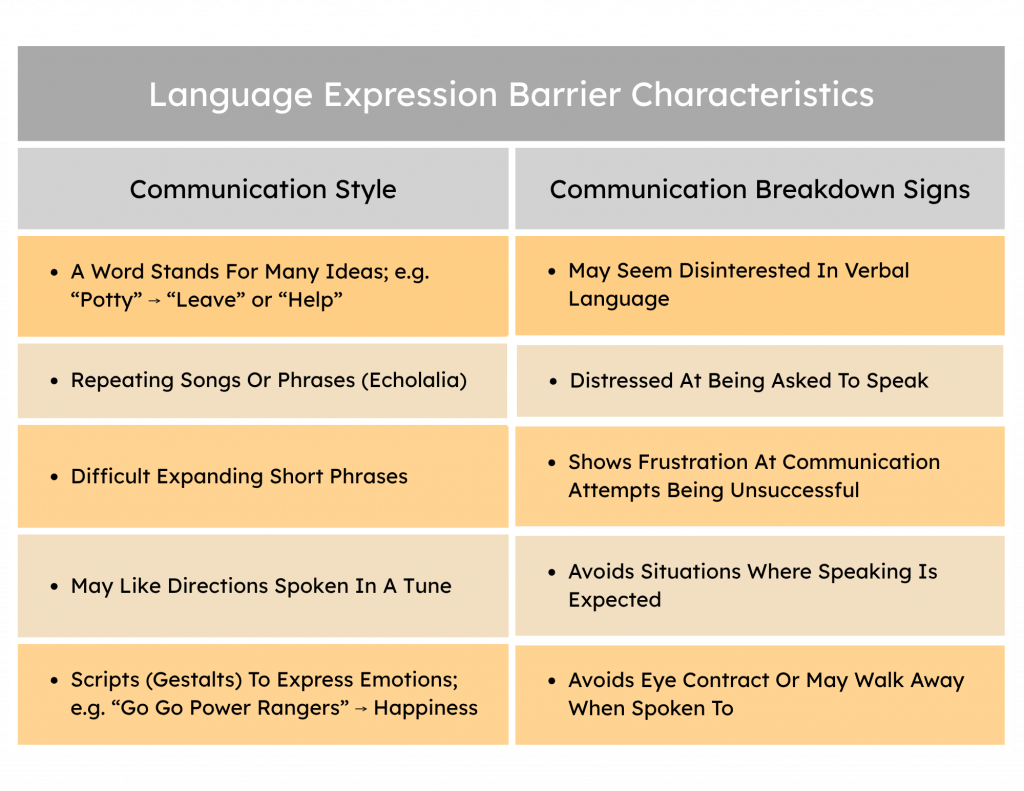
This person has thoughts, ideas, wants, or needs they want to communicate, but they have difficulty finding, accessing, or using language to express themselves clearly. Their words may not express what they wish to communicate because they do not have access to the language needed to communicate their intended meaning.
Think of it like a library with a jammed door. Some words can squeeze out from under the door or sometimes you can unjam the door to access your full library. But access to your library of words is what’s preventing you from communicating.
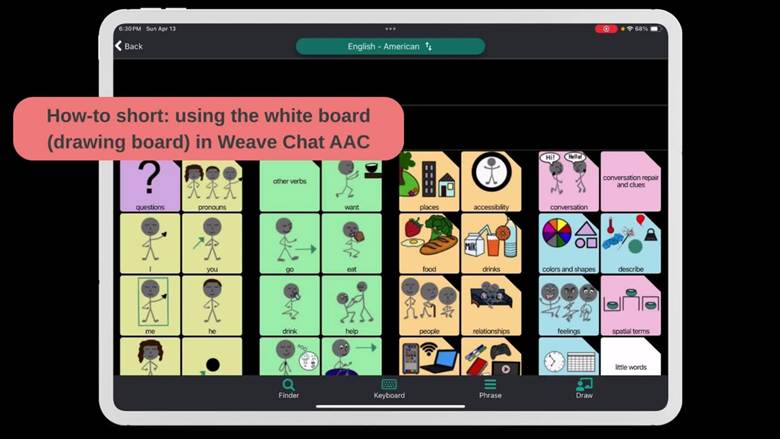
WeaveChat AAC: A great beginner– friendly and free communication board app [Link]
What does it feel like?
Some people reported feeling frustrated when others do not understand them. They know they have thoughts, wants, and needs they wish to communicate. What they say does not truly reflect what they wish to say.
Over time, repeated communication breakdowns can make speaking feel discouraging or pointless, especially when their attempts are misunderstood and lead to the situation feeling worse than before.
Repeated misunderstandings can lead to frustration, discouragement, or a sense that spoken communication is not worth the effort.
Understanding the Barrier
When spoken language does not reliably support the person speaking, they may begin to rely on other methods that have been more successful.
For those with a Language Expression barrier, actions, facial expressions, or behavior become more reliable ways to communicate compared to spoken language.
Communication attempts that are reliable and consistent are more likely to be repeated.
When witnessing these behaviors, it’s important to note that the behaviors themselves can possibly be communication. There may be a reason or goal for the language to be spoken or unspoken. By addressing the reason, we can work towards developing a plan to meet their needs and support their language development.
The Language Expression barrier can have various causes. It’s important to remember that understanding the language (input) and expressing language (output) are different skills.
A person may understand much more than they are able to say. They are always gaining new information around them. The language people hear, see, and experience influences how they learn to communicate. The goal is to develop a method to communicate with others because it allows connection, understanding, and safety.
Why AAC Helps
People who experience a Language Expression barrier may not have access to the language needed to communicate.
Picture-based AAC tools can help build associations between words and categories to begin building a solid foundation for communication.
Often, individuals with a Language Expression barrier are expected to improve their verbal communication skills without being given the tools needed to communicate.
They are asked to improve their verbal skills without support. It’s like expecting someone to learn algebra without first teaching the concept of numbers. Supporting them where they are currently opens the door for future opportunities.
When verbal speech alone fails, it is natural and expected for the individual to rely on methods that are available to them. For example, a student pulls or pushes a teacher to a door to tell them they want to leave.
They used these pushing and pulling behaviors because that was the system available to them since no other method had been presented to them.
Providing AAC is not preventing communication development. It is creating the opportunity for change, progress, and development of communication to happen.
Unless we provide AAC supports and present an alternative path, the opportunity to change is limited or missed.
Opportunities only exist when the tools are available, dependable, and supported.
By presenting AAC options in their daily life, you are giving them a chance to develop and thrive.
A Day in Their Shoes
Imagine you are stuck in a classroom. You have been there for several hours. You feel a painful buzzing throughout your body. You know you need to move but every time you try, you are told to sit down.
You try repeating “Potty” to ask for a walk, but they misunderstand you because you have just gone to the restroom several times.
You know it would take multiple trips of walking to get the annoying buzzing to stop, but they don’t understand. The teachers look confused and it’s frustrating to repeat “Potty” repeatedly.
You know saying potty leads to a walk outside! You can’t say the other words!
You try to push and pull a teacher to the door. Maybe they will get it if you show them where you want to go.
They smile in realization and say, “A break is a good idea!” and they hold your hand and walk down the hall with you!
They understood you! Finally, someone understood what you were trying to say.
This is an example of how behavior can become a dependable method for communication.
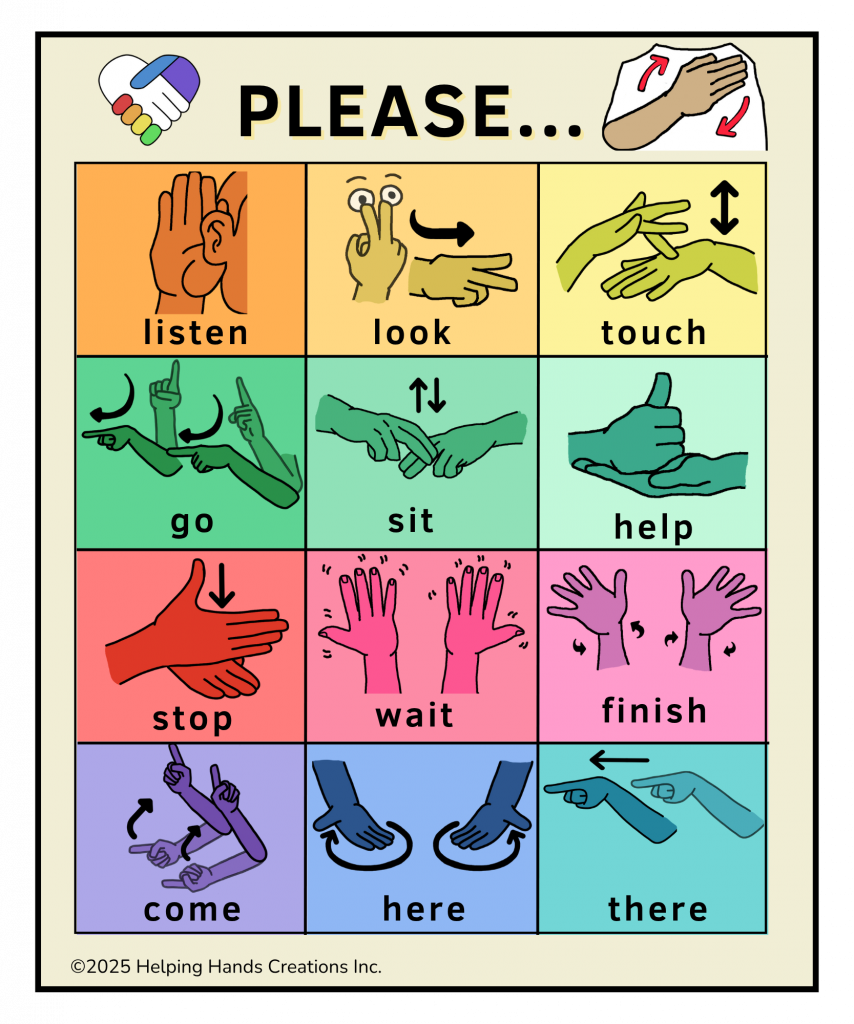
Coming soon in our Helping Hands Free Resource Library, an ASL based communication board.
Executive Planning Barrier
“I don’t know how to start or structure what I want to say.”
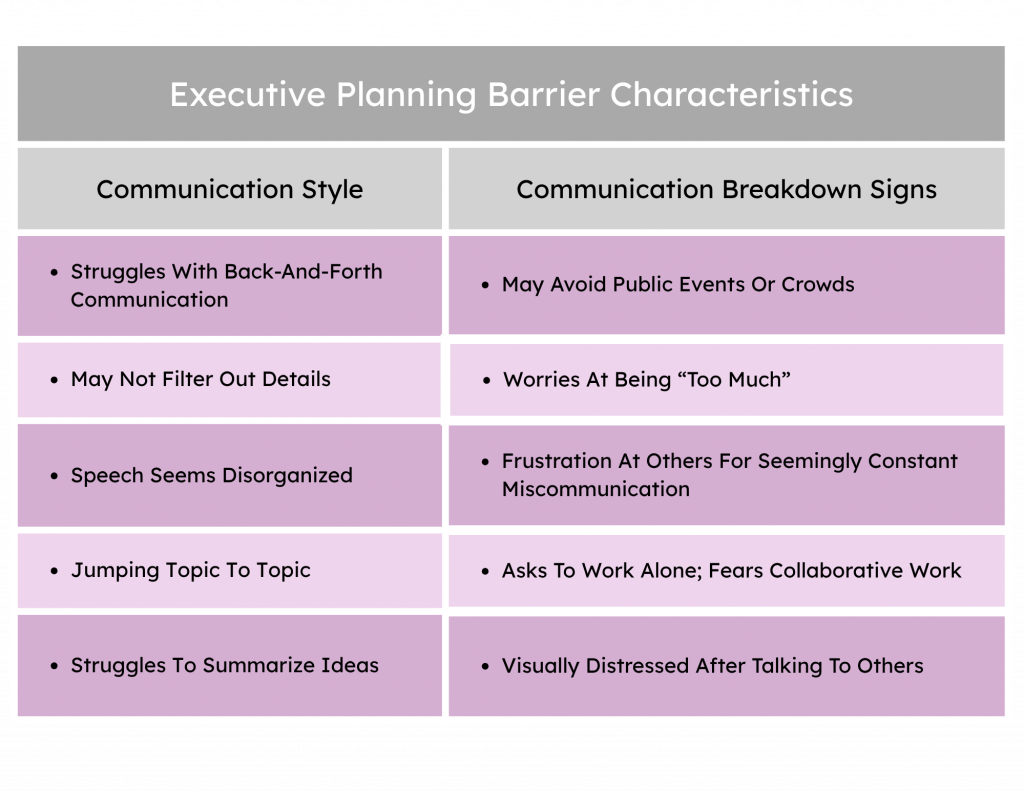
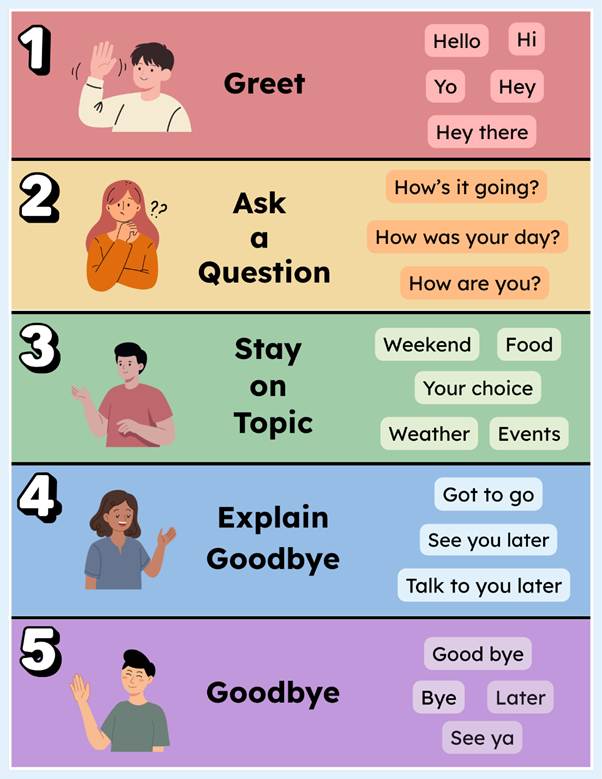
The person may understand what they want to say, but may struggle to organize their thoughts, filter out unrelated details, sequence their ideas, or reach their intended message while speaking.
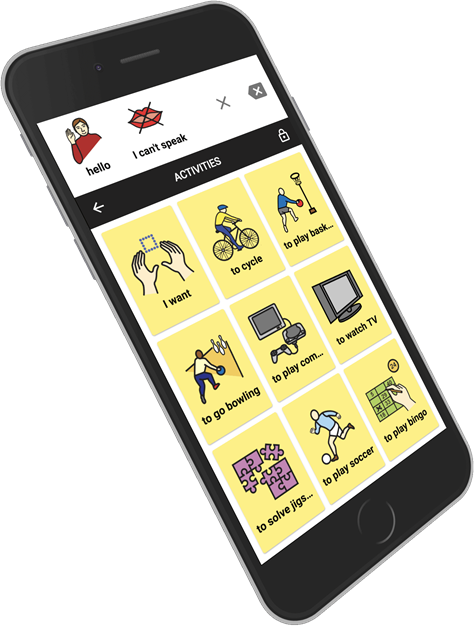
Cboard: an AAC board with sentence stems [Link]
What does it feel like?
For many with an Executive Planning barrier, they may feel anxiety around the idea of communicating with others, despite having plenty to say.
The difficulty of filtering and organizing their thoughts may often lead to miscommunication or over-explaining, which often leads to personal conflicts.
For communication to be effective, it needs the information received to match the same meaning it was meant for when delivered.
When people have an Executive Planning barrier, communication can become a recurring battle they encounter while under equipped and stressed. Events, people, discussions, or relationships can become a source of anxiety when not properly supported.
Understanding the Barrier
When spoken language becomes a pattern of conflict, they may begin to avoid communication altogether.
For many with the Executive Planning barrier, you will notice their language struggles impact their relationships and daily lives.
When witnessing someone struggling with an Executive Planning barrier, it’s important to help them organize and filter their thoughts so their communication does not lead to social conflict.
Their communication attempts need to become a positive feedback loop that encourages them to keep taking steps that lead to their desired outcomes.
It can be difficult to pinpoint the barrier’s influence on daily life and relationships. When it’s identified, it’s important to reassure the person with the Executive Planning barrier.
Their self-esteem and motivation can improve after realizing it’s the organizing and the filtering that is the issue. With practice, communication can become easier and less stressful.
Another way to understand the Executive Planning barrier is as if someone asked for a book to answer a question, but you accidentally hand over ten books that indirectly talk about the topic. People can get overwhelmed when faced with too much information, so even with the best intentions, the intended message can get lost and the thought behind the words can be misunderstood.
Why AAC Helps
People who experience an Executive Planning barrier need support to structure their words.
AAC tools can do more than provide an alternative to verbal speech or find words; they can also help organize thoughts, plan conversations, and give structure to conversations.
It’s not about replacing speech, but rather supporting speech so it reaches the goal of communication.
A Day in Their Shoes
Imagine going to a mixer for a work event. You are nervous because it feels like people tend to dislike you when they meet you.
But this workplace has been kind, and they have a hybrid schedule for remote work. It’s been a nice mix of meeting clients and working independently.
A co-worker who has many shared interests with you waves you over. They are talking about Dungeons and Dragons! You excitedly join the conversation.
You notice after a while, you get the same feeling you always get —people not liking you. You aren’t sure what you did wrong.
You stop talking. The feeling of being disliked goes away, but still feels like rejection.
You decide it’s too risky to speak, so you leave the event early.
Coming soon in our Helping Hands Free Resource Library
Speech Production Barrier
“My body has trouble making speech and prevents me from saying what I want to say.”
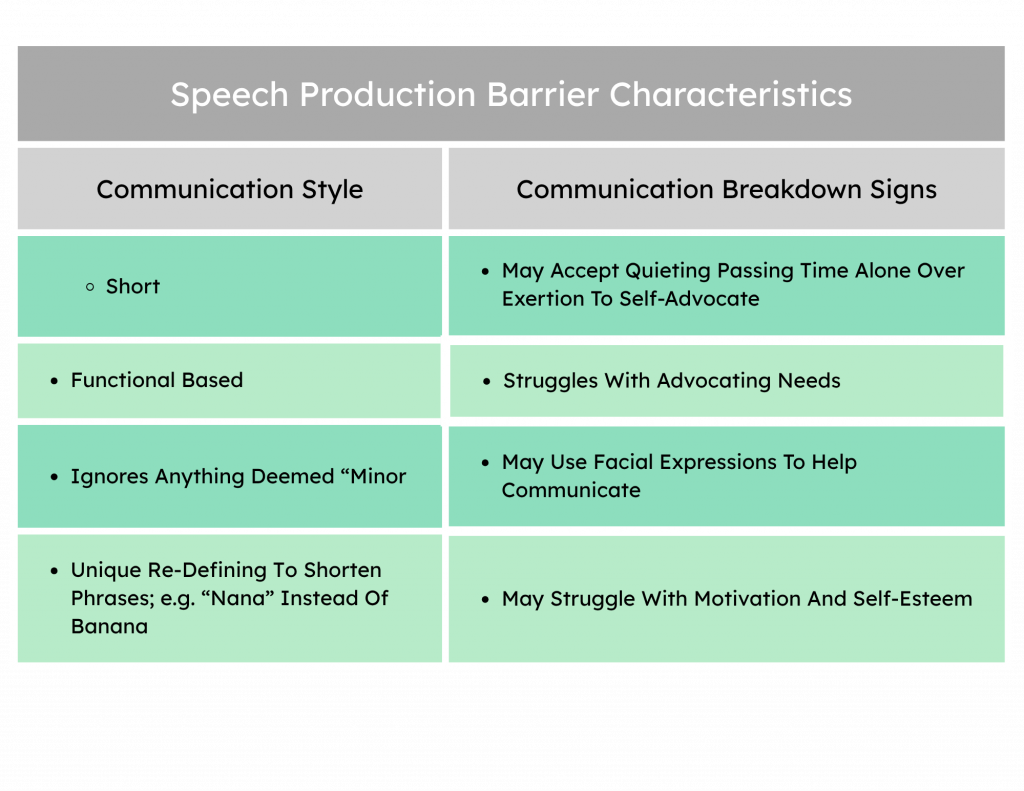
The person knows what they want to communicate but has difficulties with the physical process of producing speech. This can make verbal communication challenging, physically draining, or unavailable.
Furthermore, physical difficulties in general can also create additional access barriers that affect communication in other ways. While not directly related to the Speech Production, it’s an additional barrier that often accompany people with a Speech Production barrier.
The speech barrier relates to physical capacity, not ability or motivation.
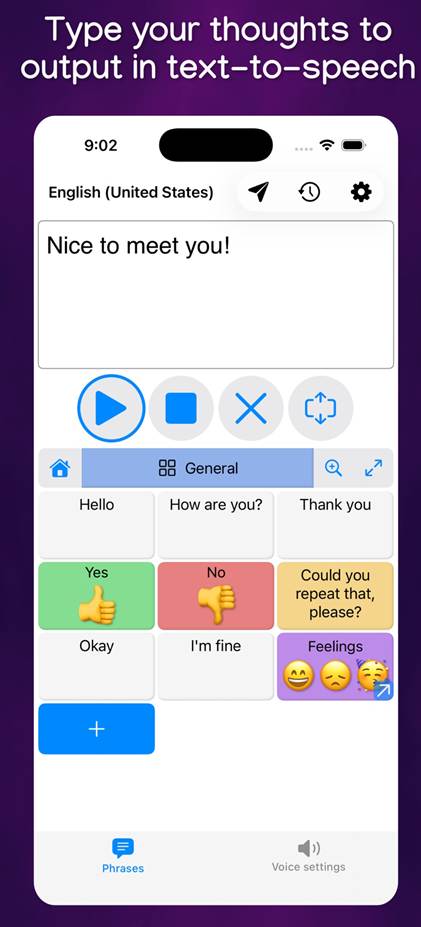
Typing Talk is a free app that uses visual based text-to-speech [link]
What does it feel like?
Some people reported feeling frustrated when others do not accommodate them or slow down to allow them to have opportunities to speak.
In a busy classroom, it can be difficult to remember that a “quiet” student with a Speech Production barrier isn’t purposefully being quiet but rather does not have a choice in the matter.
Without a plan that addresses their needs, they can be left isolated, silenced, and unsupported.
Ideally, access will increase independence, strengthen skills, and motivate movement.
Understanding the Barrier
Speaking is a skill that includes many different aspects of working at the same time. You have physical movement, word planning, organizing, and so much more goes towards producing conversations. But physical movement influences each of those skills.
If you struggle with physical oral/face movement, there’s a chance that many forms of communication become harder to access.
For example, if the physical barriers go beyond Speech Production and impact other physical aspects of communication, the intensity of the barrier expands.
Many environments don’t consider the physical needs of someone who struggles to move. So if you struggle with a Speech Production Barrier, you may choose to stay quiet than to go through all the extra effort to be heard.
Want water? It’s more work to ask, have someone get it to you, remember to carry your bottle for you, etc.
Supporting someone with a Speech Production barrier is a task that isn’t just about accommodating communication. It’s also adjusting all the nonverbal ways we communicate with one another using movement.
Why AAC Helps
People who experience a Speech Production barrier encounter physical barriers that the average person doesn’t realize exist. When AAC tools are used, it opens doors to expanding skills and supporting users.
For example, let’s say the user can speak; it’s just lower in volume, frequency, and length. Using an AAC device to produce sentence stem starters like “I want” can be an effective way to:
- Gain attention from others
- Prevent exhaustion
- Encourage building vocabulary in smaller and attainable steps
AAC does not have to be a replacement for speech, but rather a tool to encourage speech because speech paired with tools becomes accessible and attainable.
A Day in Their Shoes
Imagine sitting at your desk. You’ve been done with your assignment and are playing with Playdoh.
You need to go to the restroom, but when you try speaking, no one hears you.
You are playing the usual “waiting game” of asking for help the next time a teacher checks in with you.
As you are waiting, a teacher comes to introduce you to an iPad. But instead of a game, she has these buttons that say:
- I want…
- I need…
- Help me with…
She smiles and shows how to press the buttons and explains, “Hey! I got this app for you. You can use these and finish the sentence. Neat, right?”
You are immediately thankful because you know just what to do. You press each button and finish the sentence each time. “Potty.”
She immediately realizes you aren’t doing it as an example and goes to action. “Oh man, it’s been a while, huh? Let’s go to the restroom and you can practice using this more after we get back.”
Finally, a way to catch their attention! This makes things easier.
How You Can Help
Now that you have a better understanding of different types of barriers, what can you do to support people with communication difficulties?
Support AAC users by:
- Advocate for alternative communication styles
- Encourage their attempts and allow breaks when needed
- Provide easy access to their chosen tools
- Understand they may need time after setbacks
- Accommodate when possible
How can I show encouragement and acceptance?
- Fill your classroom or home with visuals!
- Make visual communication strips for common routines
- Experiment with different AAC tools: transition boards, text-to-speak apps, etc.
- It will take time to find the right tool, but it all starts with trying
- Give access to tools at home or in the classroom
- By allowing access, you give the user the ability to self-advocate their needs.
- Embrace communication beyond verbal speech
- Learn functional ASL, try using an AAC app for a day, or provide small whiteboards in your classroom. Showing acceptance is the first step in creating an accepting environment.
Here are some free, online AAC app trainings for teachers-
- Learn to Use WeaveChat
- Learn to Use TouchChat (make a free account first)
- Learn to Use Proloquo2Go
- Here are some resource links to learn more about AAC-
Closing Thoughts
Throughout this article, we explored different types of barriers that impact verbal speech, but we also explored possible solutions and alternatives through AAC.
Barriers don’t have to mean it’s the end, instead, it can be the start of a new journey as you discover less traveled paths.
The goal is connection and the exchange of understanding and being understood. Communication is the goal and AAC is a method to help reach that goal.
I wish you all the best helping yourself or others in their journey to thrive.
Sam Sandate White, Co-Founder of Helping Hands Creations, Creator, and Writer
Claire Lovelace, Special Educator and Assistive Technology Professional
