
Check-In Routine to Support Emotional Regulation
Recovering from emotional upsets can feel overwhelming when you are already struggling to keep yourself from increasing the distress you’re in.
You know yelling or moving too fast will make the situation worse, but it’s too overwhelming to think, too many things you can’t predict or control, and the choices you need to make are endless.
Many people won’t understand how deeply emotions affect my body’s responses and behavior, and they may never understand.
But that doesn’t keep me from doing actions that support my body and mind when I’m stressed.
Today’s resource is a routine builder, specifically for when you feel overwhelmed and need a routine to fall back on.
A routine gives your brain a steady path to follow when everything else feels chaotic. It’s not about being perfect; it’s about safety and giving your body what it needs before a meltdown or unsafe choices occur.
Why Routine Matters
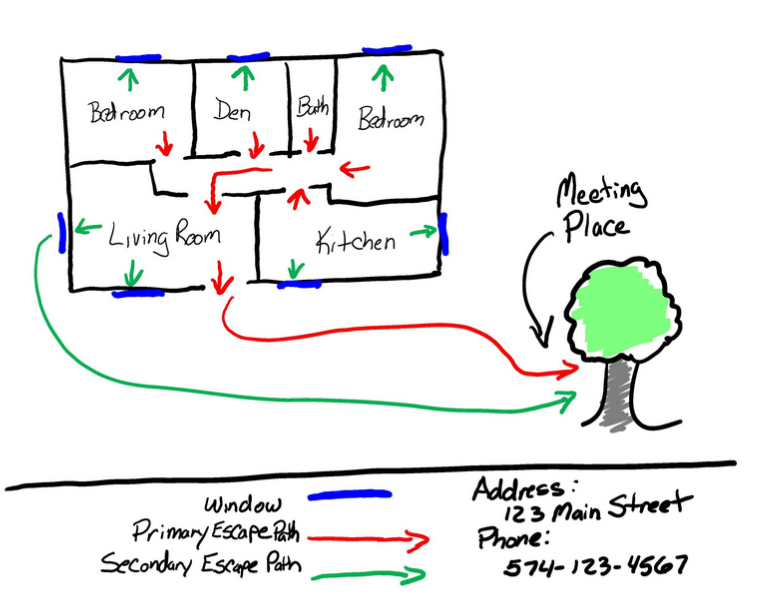
Just as we practice safety for fires, we can practice routines for big feelings!
When you are dysregulated, decision-making becomes harder. Your brain is trying to manage all the sensory information around you, the emotional intensity, and the physical discomfort at once. It’s hard!
It’s not your fault that when you are stressed, choices are even harder to manage.
In these moments, even simple choices can feel impossible, but a routine removes the pressure of having to “figure it out.” It’s the same reason we do routine fire alarms.
It becomes a familiar script your brain already knows how to follow. This predictability lowers anxiety, supports emotional regulation, and helps you focus on your self-care during moments of distress.
Needing a routine is not a weakness. It is a skill — one that supports independence, safety, and emotional resilience.
How A Short Guide Helps
During overwhelm, your brain needs things to be:
- simple
- literal
- predictable
- low-pressure
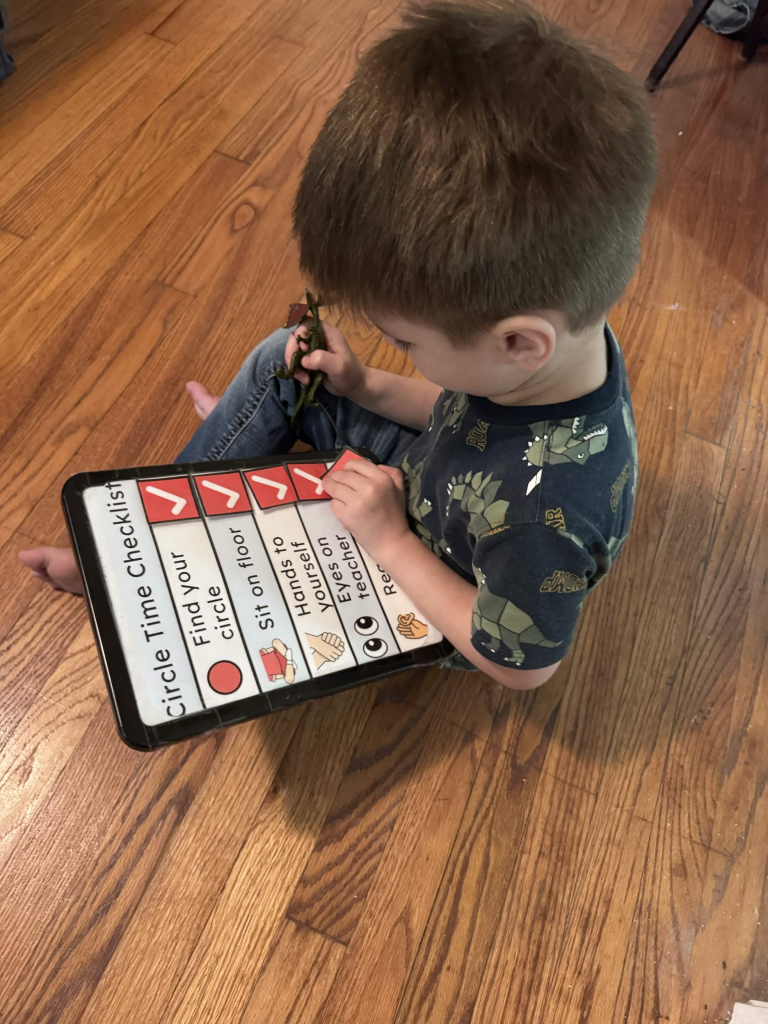
A short list gives you a clear starting point. It helps you shift from “I don’t know what to do” to “I can try one small step.”
It keeps you connected to your body instead of getting swept away by the intensity of the moment. It also helps to keep you accountable because it was your choice, before the incident, to follow this list.
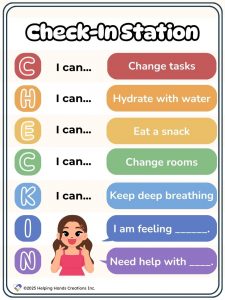
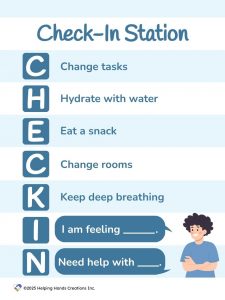
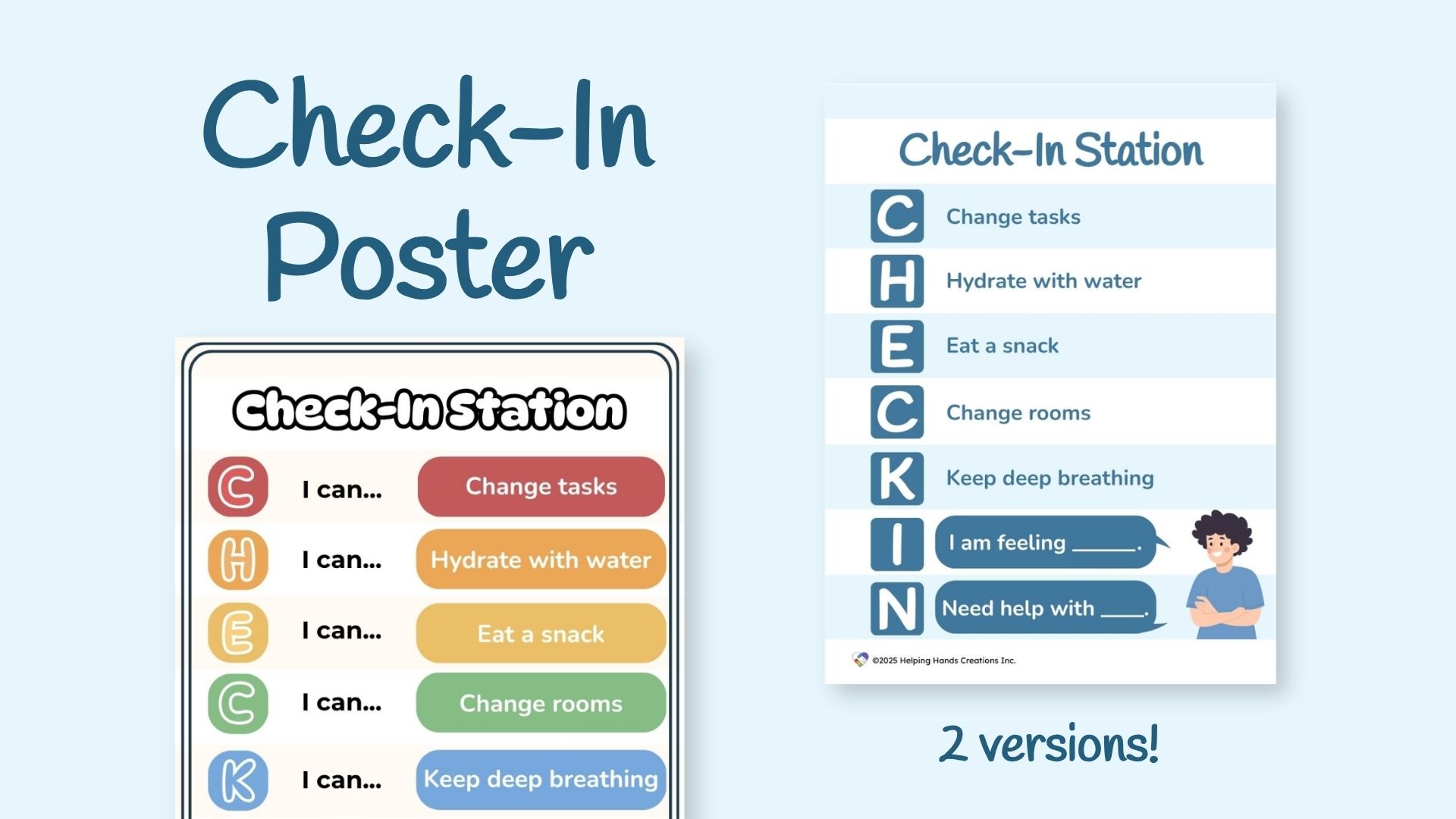
Your CHECK‑IN acronym does exactly this. It offers small, safe actions that support your body and nervous system:
- Change tasks
- Hydrate
- Eat
- Change rooms
- Keep breathing
- Identify feelings
- Name needs
These steps are not meant to fix everything. They are the way you choose to support yourself and your strategy of choice managing your self-care.
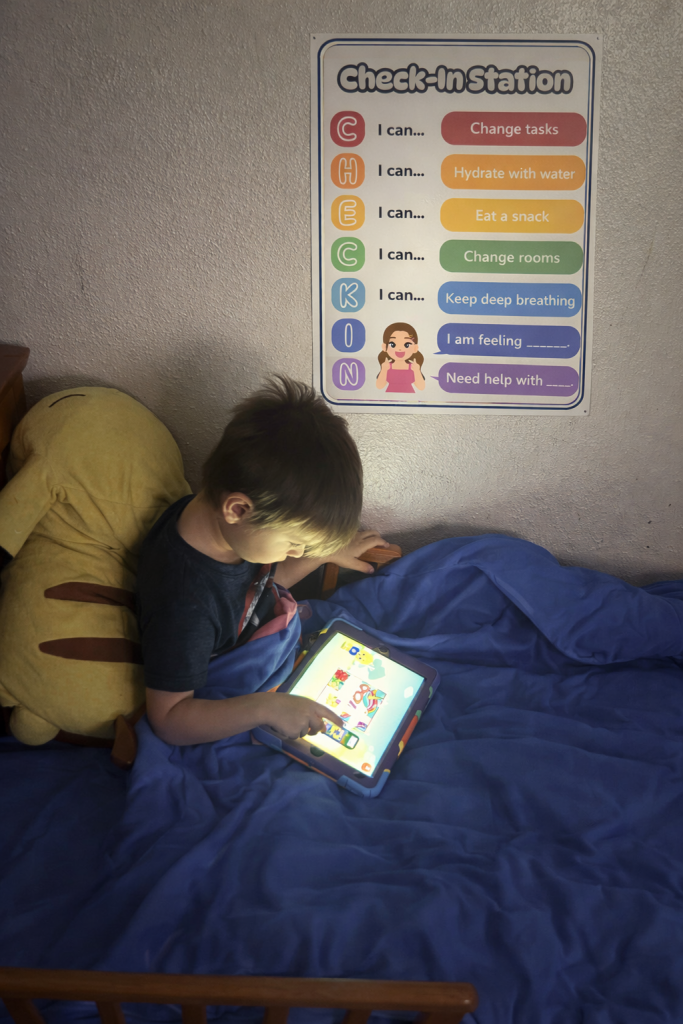
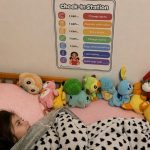
How to Use Your Check-In Station
Plan how you want to remind yourself.
Do you want it in the kitchen where you can get a snack or a drink?
Do you want it in your office where you know you get stressed while working?
Do you want it in a nice, comfortable corner in your house where you can relax in?
Or print it out and keep it in your bag as an emergency plan?
However, you decide to use this resource is up to you, but it’s here to guide you if you need it.
A Step Toward Independence
By choosing a routine — and practicing it — you are already taking a step toward independence. It’s not someone else who chooses to follow this list; it’s your choice to leave an unsafe situation and instead lead your body toward safety.
You are creating a path out of the overwhelming loop that haunts many neurodivergent people.
A routine doesn’t take away your power. It gives it back to you.