
Transitions are one of the most underestimated skills in childhood. As educators, we often think about transitions in terms of moving from work to play, or from one task to another.
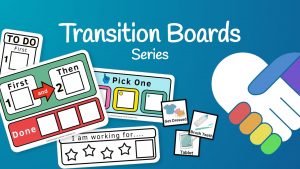
First–Then charts, visual schedules, and to‑do lists are staples in classrooms because they help children shift tasks with predictability, visual steadiness, and confidence in the flow.
But when I became a parent, I realized something surprising: the hardest transitions weren’t the “boring to fun” ones— they were the “fun to fun” ones.
Moving from one exciting activity to another can be just as challenging, sometimes even more so. It was emotionally distressing for me and my daughter to try setting up a fun day at the aquarium and instead leave with both of us in tears.
I could see how painful it was for her to be deeply engaged and enjoying on exhibit and yet be expected to stop and move on. It didn’t matter if the next animal was just as wonderful! She was still feeling the deep loss and confusion of being forced to leave.
That’s when I realized how much trust and anxiety are involved in exciting places, and I was thankful to bump into an expert who knew the solution.

What I Learned From Watching My Daughter in Music Therapy
I was lucky enough to sit in on my daughter’s music therapy sessions. I watched her move from drums to scarves, from piano to shakers, from dancing to resting. Each shift was intentionally building excitement and joy, but still holding the expectation of transitioning.
The therapist used:
- Visual timers
- Visual cues
- Predictable routines
- and small moments of co‑regulation when needed
And even though some transitions were tough—sometimes she cried, sometimes she resisted—she never remembered those moments. When I asked her afterward, she always said:
“I love music! It’s fun!”
She remembered the joy, not the struggle. That was the moment I realized: children can build transition resilience without losing the fun!
That’s when I realized, I could gift this knowledge for other professionals and families to use.

Why I Created a Fun‑to‑Fun Choice Board
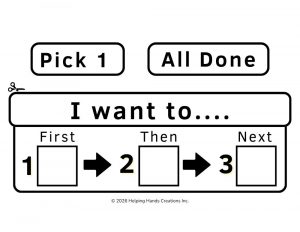
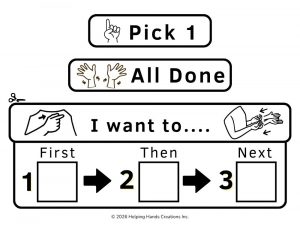
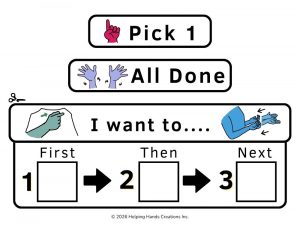
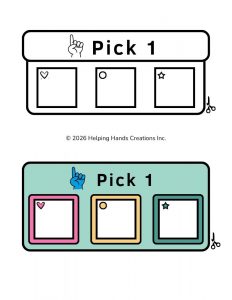
This led me to develop a choice board specifically for exciting activities. Instead of telling a child what comes next, the board lets them choose the next fun event from several options. This small act of autonomy helps them:
- Practice putting a preferred activity down
- Trust that something good is coming next
- Build confidence in their ability to move on
- Strengthen emotional flexibility for bigger outings
This isn’t a daily tool. It’s a practice tool—something you use once a week to build the emotional muscles needed for places like the zoo, aquarium, birthday parties, or theme parks.
These environments require constant transitions, and children need to know they can handle them.
It’s exhausting for you and your child to use your full energy for a fun-to-fun board repeatedly. There’s a reason vacations often need a rest day afterwards! So once a week is the perfect amount of practice and rest.
Why Fun‑to‑Fun Transitions Are So Hard
When a child is having fun, stopping feels like a threat to them. Their brain is saying:
- “Why do they want to hurt me and stop the fun?”
- “What if I lose this feeling and not get it back?”
- “What if they get mad at me and I can’t do this again?”
A choice board helps counter those fears by showing them:
- You’re not losing fun >> you are choosing safety so you can continue to have fun.
- You’re not being pulled away >> you’re moving forward; the fun will happen again later.
- You’re not powerless >> you have power by planning, you are making the choices you are doing.
This builds trust in the routine and trust in themselves and in adults around them.
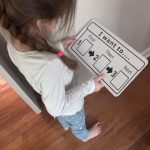
Here is an example choice board layout I have used:

I have them pick 1 activity at a time and move it to the front, then we commit to the list they planned.
What Activities Work Best
Choose activities your child already loves—things that feel safe, familiar, and fun:
- bubbles
- dancing
- playdough
- music
- sensory toys
- movement games
The goal isn’t to “test” them. The goal is to let them practice the skill of stopping and continuing. It’s giving them a bit of control in an overstimulating setting.

Add Predictability With Visual Timers
Timers help children see the transition coming. They reduce surprise, give structure, and make the shift feel more manageable. Pairing a timer with a choice board creates a predictable rhythm:
- Play
- Timer
- Choose
- Transition
- Play again
This rhythm becomes a routine they can rely on and becomes a safety net for them.
The Heart of the Practice
Fun‑to‑fun transitions teach children something powerful:
“I can leave something I love and still be okay.”
It takes practice, and if enough time goes by that they don’t do a task, that anxiety may come back and the skill will need to be re-learned.
But this skill will carry them through birthday parties, school events, family outings, and eventually—life. It’s not always easy, but it’s deeply worth practicing.