
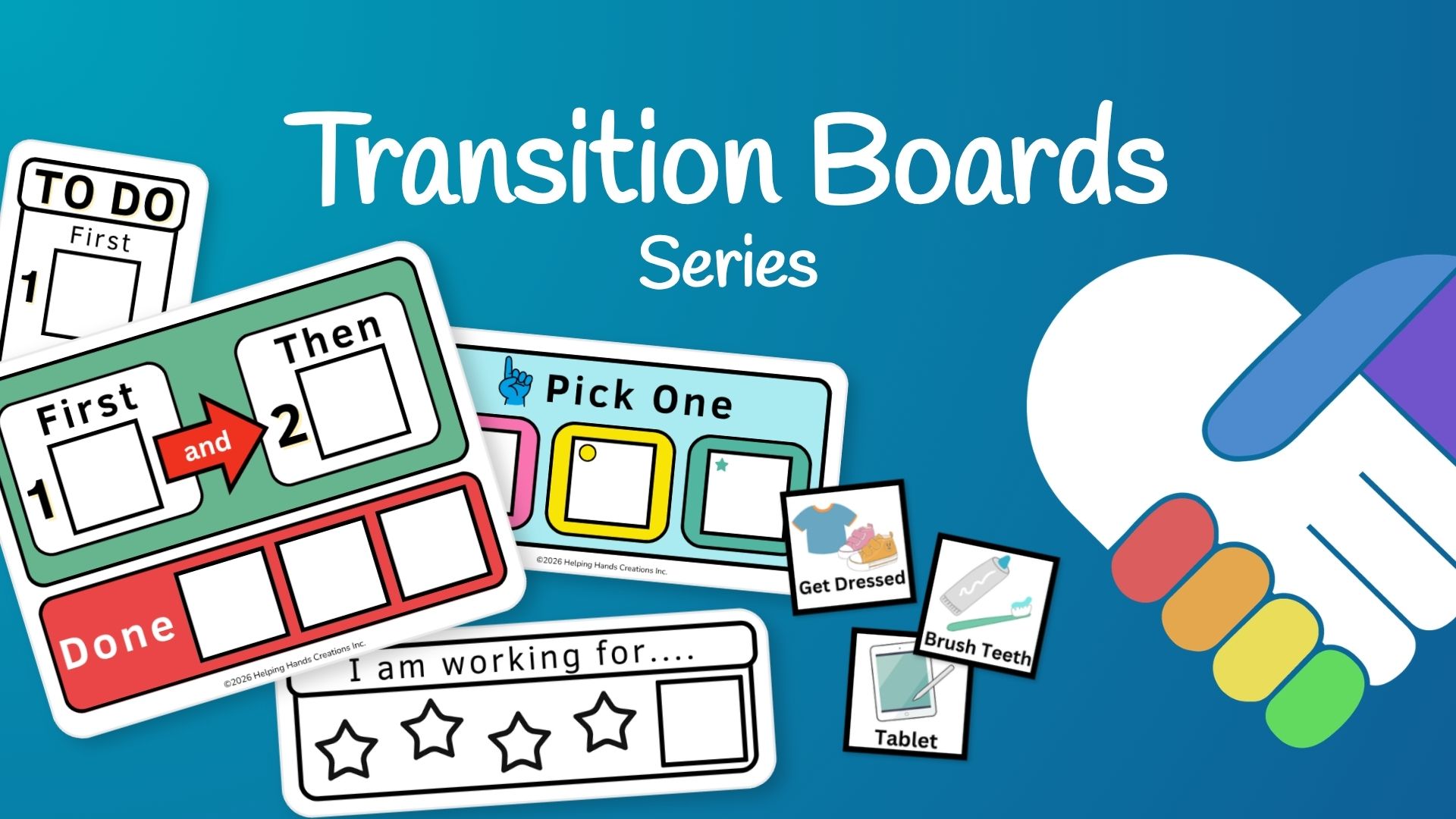
Imagine you’re at a concert.
The lights are flashing, the speakers are booming, the crowd is cheering, and your senses are being pulled in every direction. Suddenly, the person next to you asks you to complete a test.
However, there’s too much happening; concentrating on anything other than the concert feels almost impossible. They get frustrated that you’re not doing the test, so they try speaking to you about it.
But no matter how hard you try to listen, you can’t hear them over the concert.
Finally, they write the instructions down.
Suddenly, you can understand what they are asking for.
You realize it’s not a test, just a helpful flyer to take home.
The task was easy, but the miscommunication and confusion made it hard.
That’s the power of visual tools.
For emerging neurodivergent readers, visuals paired with text make communication predictable, consistent, and trustworthy.
Task boards cut through sensory noise surrounding the reader and reduce the cognitive load of decoding.
Visuals aren’t just helpful — they’re essential. They make the world easier to navigate, especially when everything around neurodivergent people feels like a concert.
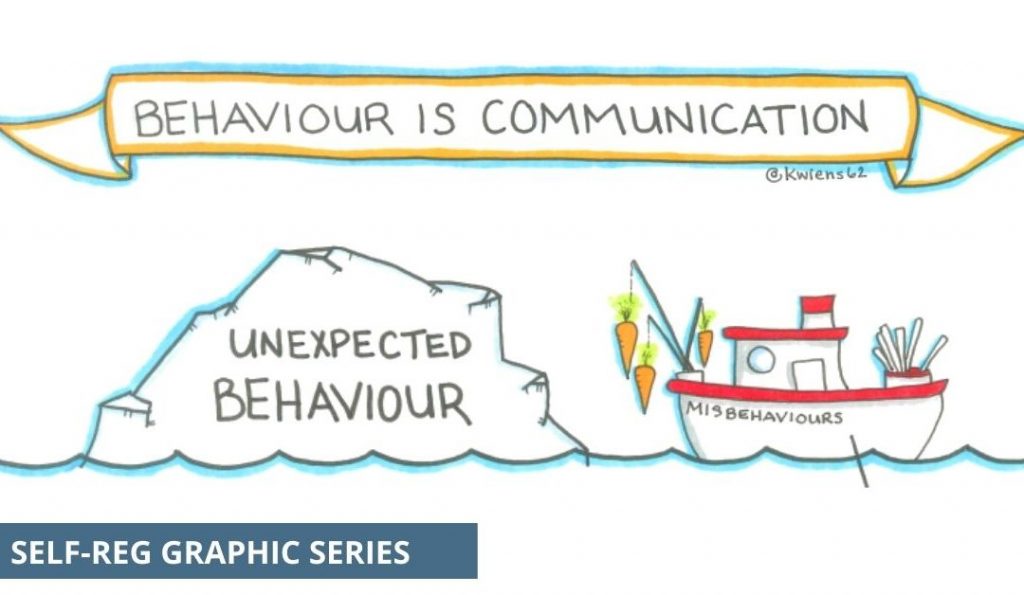
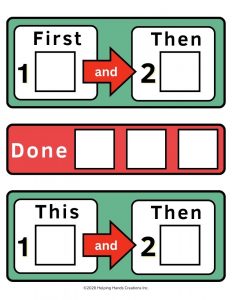
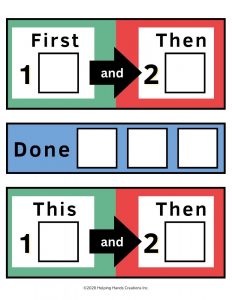
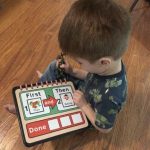
How do First and Then boards help?
As I explained in my concert example, the world can be a very overwhelming place for neurodivergent people.
Many times, when I work with families or professionals who are new to creating neurodivergent‑friendly environments, they don’t realize how overstimulating most places are for neurodivergent people.
Photos covering every inch of living room walls, toys lined up at eye level for every child, or even overwhelming lighting — there are many potential barriers and visual triggers that can make communicating more difficult.
Visual boards are essential because neurodivergent people oftentimes have little to no control of their environments. So, the more “steady” communication feels to neurodivergent people, and the more trustworthy the routine is, the more likely they will be ready to engage. Visual boards like the First and Then board help make your communication feel like a lifeline during a storm of uncertainty.
Using picture charts and other visual communication tools is an accommodation for neurodivergent communication.
When you use visuals, you are giving:
- More processing time
- A “voice” and encouraging independence
- A way to clarify the meaning of phrases
Supporting verbal communication through pictures isn’t a “shortcut”; it’s supporting and encouraging verbal communication as well.
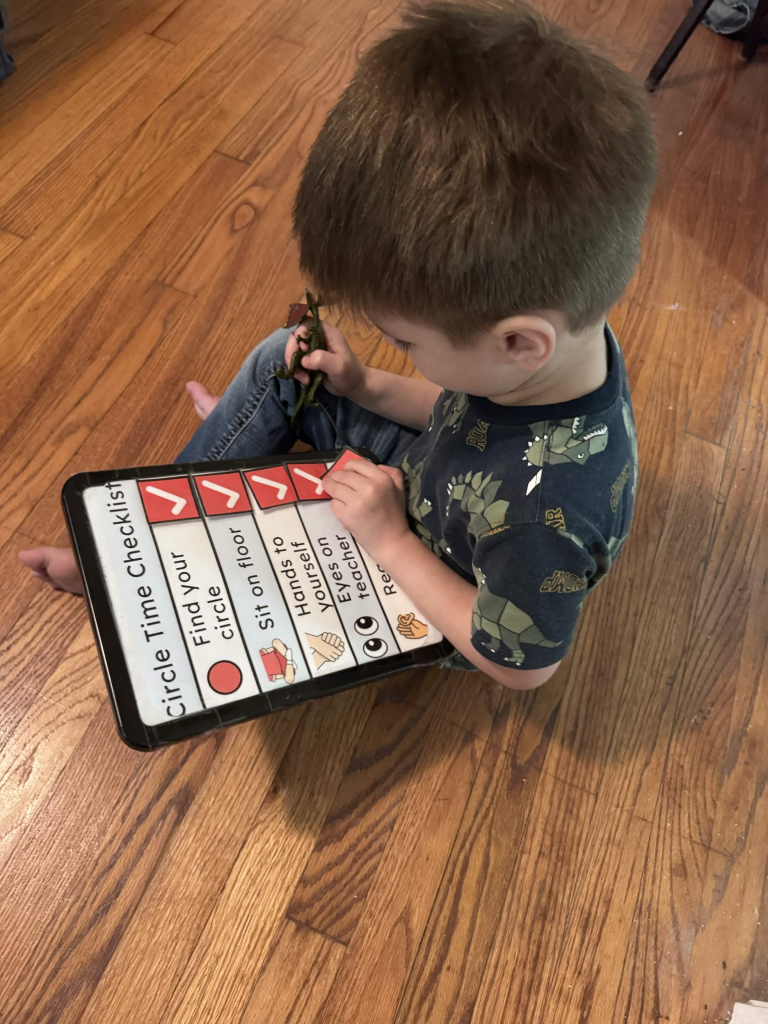
Building Routines to Influence Behavior
Many times, it can accidentally seem like neurodivergent people thrive without schedules or routines because of the amount of distress they experience during schedule changes.
“Why tell them what to do? I can let them choose and they are happier.”
But in the long run, this method hurts more than helps.
During unscheduled free time, anxiety can grow from the lack of knowledge of what comes next. The constant state of anxiety from unpredictability can create a situation where they are more likely to struggle with emotional distress.
When you have a routine, they trust in moving from step to step because previous experiences have taught them to trust you. Routines are reassurance against the anxiety of leaving one task for another.
It can be difficult to build a routine when they aren’t used to using one, so it takes consistency and time. By using visual communication, routines and schedules, and creating an environment of safety, you are creating a situation for them to thrive.

First and Then Tips
You don’t need a complicated system to make First and Then charts work. Consistency and simplicity are the key ingredients for building a solid system.
- Use clear visuals. Photos, icons, or drawings your child recognizes. Real pictures are only good alternatives if the photo is clear and visually easy to understand.
- Keep the “first” short and achievable. If it takes too long to do the action, it becomes harder to connect the task to the task board.
- Make the “then” meaningful but not over the top. Something motivating, not overwhelming. If they get too emotional, the routine practice will most likely be forgotten.
- Pair with visual timers. This adds predictability and reduces surprises. They will often begin to ask for the next task to replace on the board.
- Narrate calmly and consistently. “First we clean up, then bubbles.” Firm but calm narration helps them develop trust in your pacing.
- Celebrate successful transitions. Even tiny wins deserve acknowledgment. Quick hugs, high fives, or fist bumps are less distracting than physical rewards.
These tips help the chart feel like a supportive guide rather than a demand. Using a First and Then chart shouldn’t feel like a demand to the child; it should feel like communication.
Allowing them to sometimes choose from several options will help develop this trust as well.
Over time, the neurodivergent reader will learn to trust the rhythm of “first and then,” and transitions become smoother and less stressful for everyone involved.

Common Mistakes to Avoid
First and Then charts are simple, but it’s easy to accidentally use them in ways that make transitions harder instead of easier. Here are some common barriers that can happen:
- Making the “first” too long or too complex. Keep it short and easy. Example: “Clean up toys” is manageable. “Clean your room” is not. You can break up the room into “Pick up clothes” or “Pick up shoes” to make the tasks simpler.
- Changing the “then” at the last minute. Predictability builds trust. If the “then” keeps changing, the chart loses its power and will instead create anxiety.
- Using the chart only during meltdowns. Visual tools work best when the user is ready to learn. Use them during calm moments so they feel familiar and safe.
- Treating it like a reward chart. First and Then charts aren’t about earning something — they’re about communicating what comes next. Treating it as a reward system can create anxiety around “What do I have to do to get the prize?”
Avoiding these pitfalls helps the chart stay what it’s meant to be: a communication tool.

The Heart of the Practice
First and Then charts aren’t about controlling children. They’re about helping them feel safe and trust in communicating with you.
Predictability builds trust. “I know what comes next.” → Trust builds confidence. “I know how to do this.” → Confidence builds resilience. “I can keep going.”
Resilience then carries neurodivergent children through all aspects of their lives.
When you use visual communication, consistent routines, and emotionally safe environments, you’re not just helping a child complete a task.
You’re helping them navigate a world that often feels too loud, too fast, and too confusing. You’re giving them tools that make life feel understandable. You’re giving them a way to continue forward in life with confidence.
Visual tools don’t just support transitions — they support children. And that support becomes the foundation they stand on as they learn, grow, and thrive.