
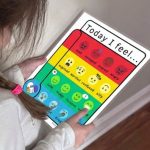
Identifying emotions might seem easy for some people, but they have always been a struggle for me for as long as I can remember. I have memories of panic‑calling my cousin:
- “What is jealousy?”
- “What does it feel like?”
- “What’s the point of it?”
- “How do I deal with it?”
To him, it was a “quirk” of mine — annoying, but easy enough to help out with. But the reality of living with a disability that interferes with identifying emotions? It is painful.
When you struggle to identify your emotions, you also struggle to identify the intensity of your responses or even how to respond.
If someone slaps your hand: Do you feel shame? Anger? Sadness?
When you jump in surprise: Do you feel scared? Excited? Anxious?
Your emotions guide your behavior. By learning more about how you feel and identifying how you react to different situations, you create a system of safety in knowing how to respond with your next steps.
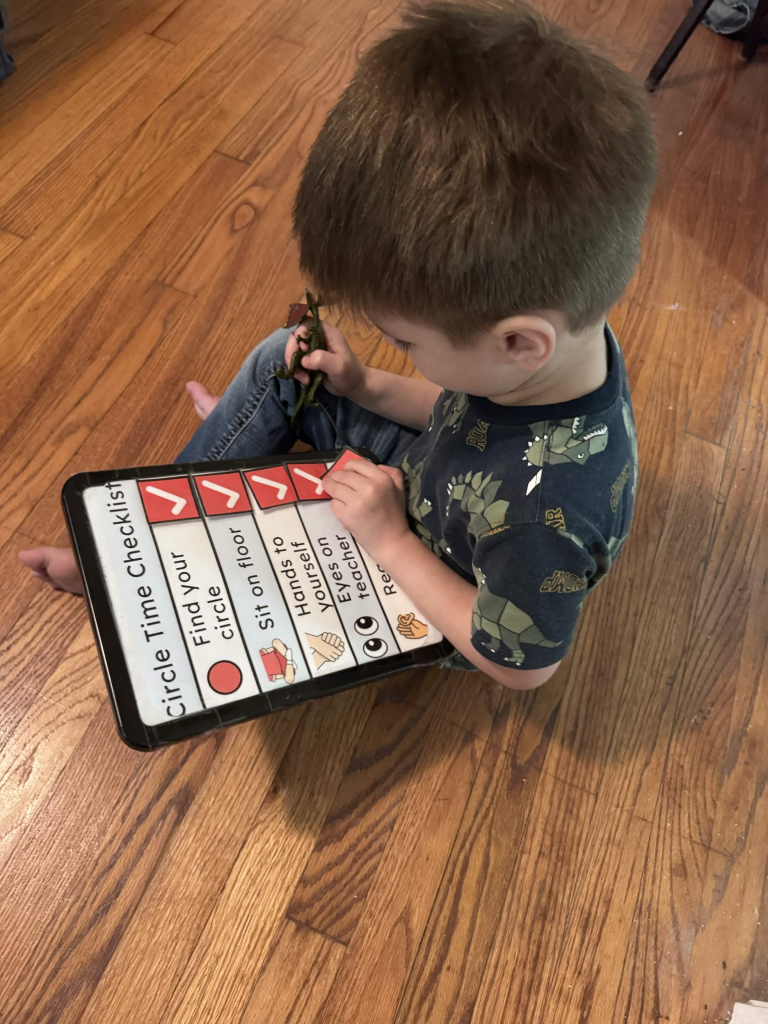
How do visual tools help?
Visual tools allow us to communicate and develop pattern recognition. We all build a library of experiences that helps us identify emotions. But for neurodivergent people, it’s harder to build that library.
Common barriers to identifying emotions are related to communication and speech struggles. By using visual tools, we close that barrier and support neurodivergent communication.
What are the 4 Color Zones?
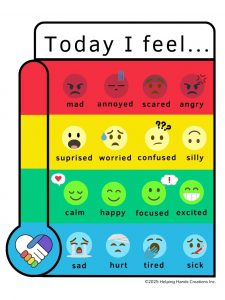
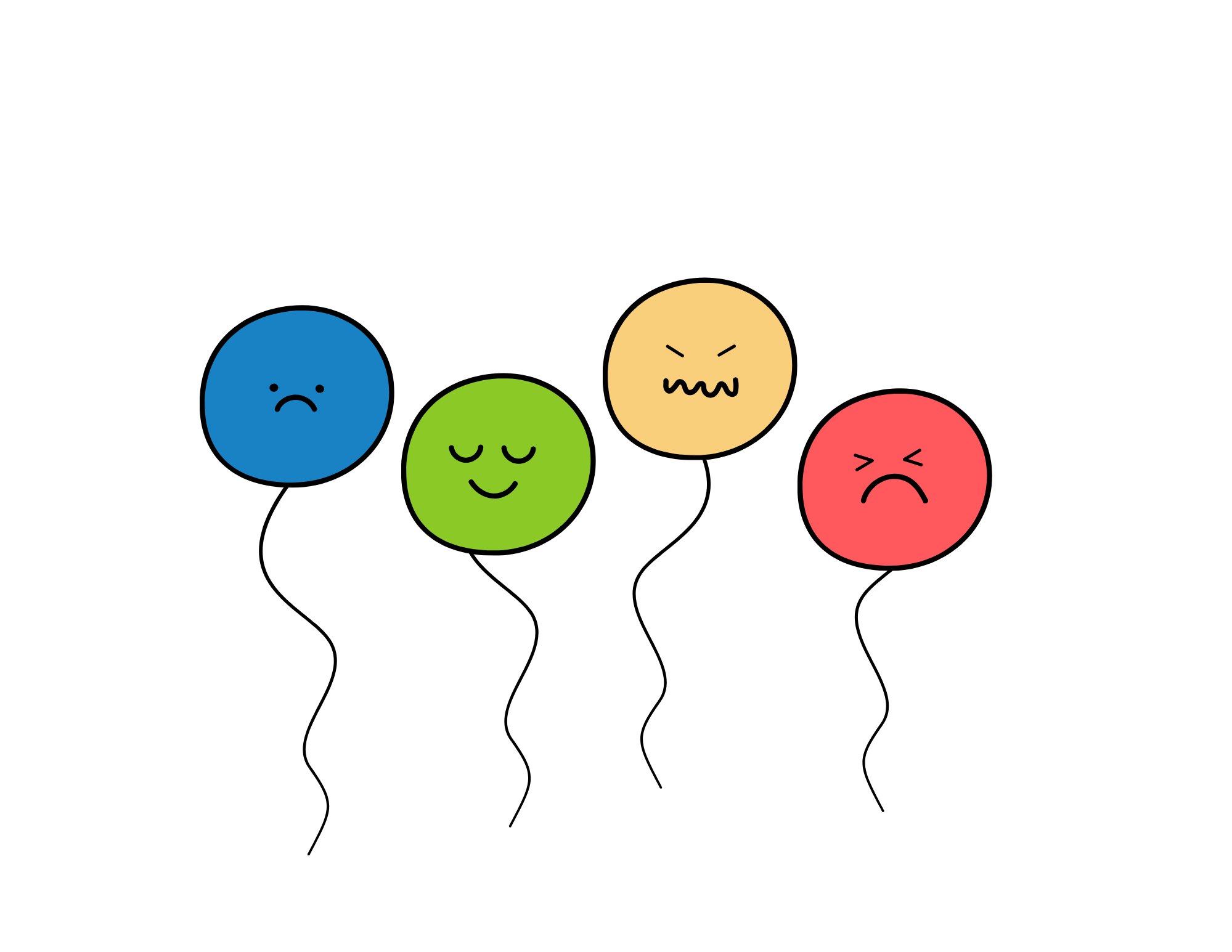
The 4 color zones are a simple way to help distinguish between different common emotions. The four color zones are:
- Blue: sad, hurt, sick, sleepy
- Green: happy, focused, calm, excited
- Yellow: worried, surprised, silly, confused
- Red: mad, annoyed, scared, angry
No color zone is better than the others. The colored zones simply communicate how someone feels.
Blue is how you know how to recover. Green is how you know you are ready to be challenged. Yellow is how you know to slow down and check in. Red is how you know you need to focus on yourself and your needs.
I strongly recommend using the 4 color zones when first working on identifying emotions because it simplifies the process of how to react. As you gain experience, you discover multiple types of emotions from different zones and develop your own strategies for how you want to respond.

Why do quick check‑ins matter?
My family actually used this exact chart for two years every morning and at the end of the day. While we did use it throughout the day as needed, I made sure to check in every morning and night.
It went beyond what was more “convenient” for me as a parent and became more about developing healthy habits.
Check‑ins allow us to plan our next steps. If we wake up feeling sick, we know to take it easy and rest. Feeling silly after school? We can go on a walk to use our energy in a safe way.
Checking in frequently teaches us how our behaviors should support our bodies and minds. Behaviors are communication — both for ourselves and for the people around us.
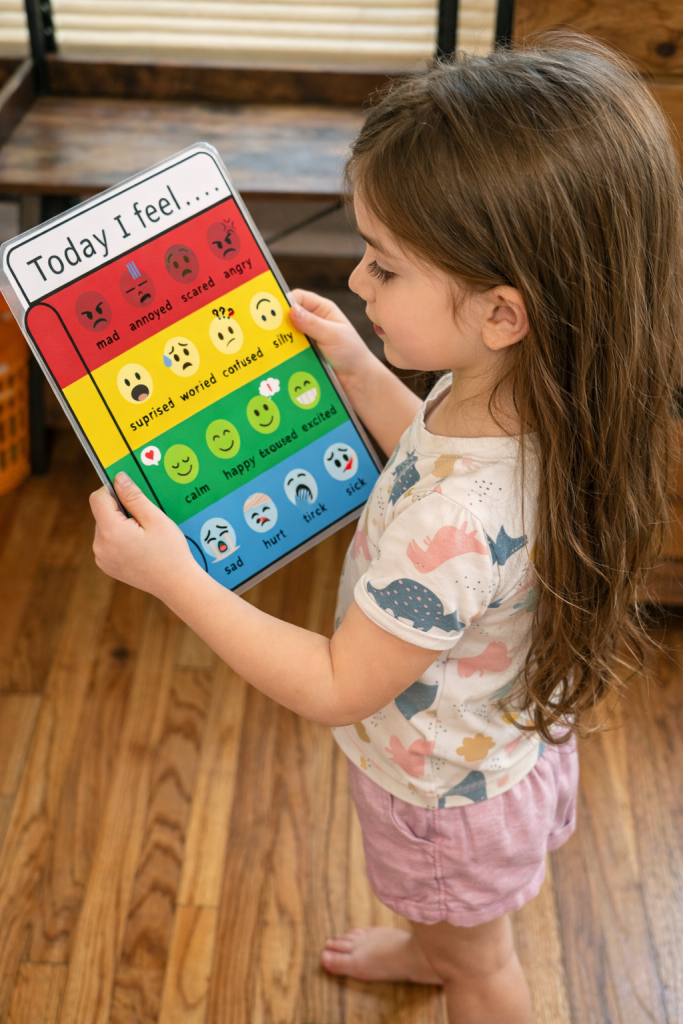
Directions to use this chart:
Using the chart is simple: identify the zone and the emotion. Repeat as needed. Try to have set times to “check-in”. Recommend before and after major events throughout the day.
Conclusion
Emotional regulation is something we learn over time, not something we’re born knowing. Neurodivergent people aren’t “too sensitive” or “overreacting” — our bodies simply experience emotions in ways that can be intense, confusing, or even physically uncomfortable. It takes time and patience, but through visual tools, we can gain independence and thrive.