
Recovering from meltdowns, burnout, or general stress can feel like preparing to enter a new battle after just surviving the first. I know I need to do “healthy” behaviors, but taking the first step often feels impossible.
When my body is exhausted? It’s like my mind is constantly fighting against a fog. Even simple choices can feel like too much and can make the tiniest of setbacks feel like the world is falling apart.
After my first experience of burnout, I was in a daze, frozen by fear of what choices to make or how to get better.
That’s why using a recovery checklist makes a difference. It’s a plan of what to do during your recovery for self-care tasks.
Having a recovery checklist gives us:
- a starting point
- a roadmap of things to try
- Let’s us ask ourselves “Did this help? What do I need this or something else?
There’s no timeline or deadline to using a recovery checklist. You can move through the checklist slowly, eliminating what you need or don’t need. The checklist is just a tool to use when you need it.
I wanted to create a tool that I wish I had on hand when I was recovering from burnout.

Why do neurodivergent people benefit from checklists?
Neurodivergent bodies process information differently, and it can be hard to pinpoint what we need when we’re recovering from distress.
What many people fail to understand about neurodivergent people, we are deeply connected to our bodies, senses, and emotional states. This can affect our ability to recover after stressful events due to lower natural resilience levels.
Our distress is real and should be supported like it is real. “Powering through” will just endanger the progress we have made so far in our recoveries.
This is why neurodivergent tools are so important. Tools can help us regain control and independence when our bodies are in survival mode.
Ignoring basic self‑care needs is like ignoring the warning signs on your computer until it overheats — and then continuing to ignore it until it’s no longer usable. If you don’t address the small parts of your life connected to self‑care, burnout and stress will return the moment you force yourself to move.
But it’s NOT our fault that can struggle to sense or keep track of self-care needs. Our bodies are different and just need support.
I know recovery can feel annoying or even painful, but you don’t have to do everything at once. Self-care will always need repeating. My checklist tool simply guides when choices feel like they’re too much.

How does the recovery checklist work?
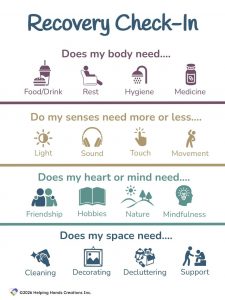
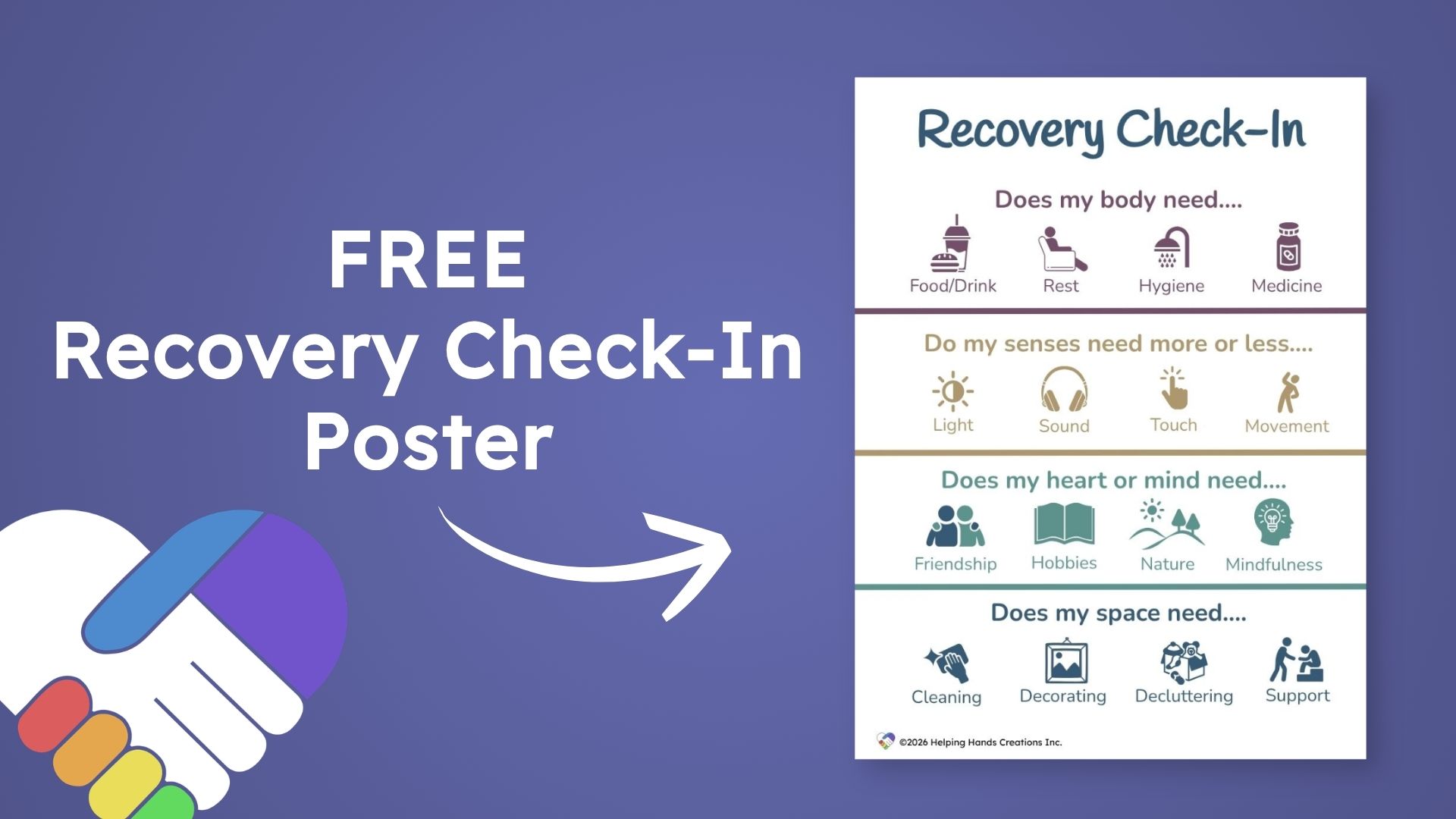
The poster is divided into four sections:
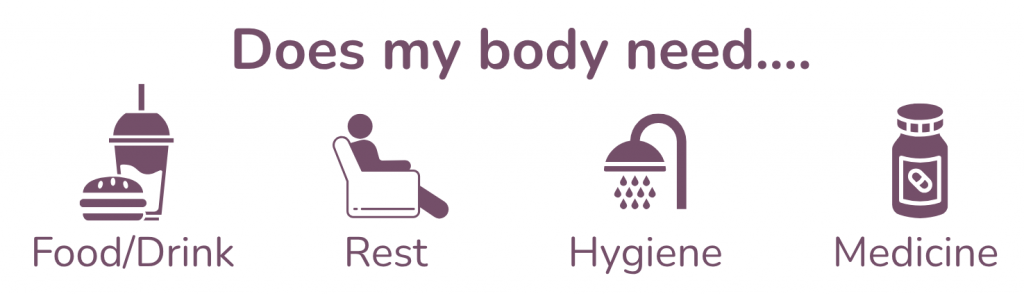
Does my body need… Food or drink | Rest | Hygiene | Medicine
Your body’s basic needs come first. Meeting your body’s needs prevents emotional distress and supports regulation. It’s a universal experience to get “hangry” — when your body’s needs aren’t met, your emotions suffer too. Losing control when your body is on empty is a question of “when” not “if”.
Here are the questions I ask myself when I am checking in on my body’s needs:
- Food or drink: “Am I hungry or thirsty?”
- Rest: “Am I struggling to stay awake?”
- Hygiene: “When was my last shower?”
- Medicine: “Do I have meds I need to take?”
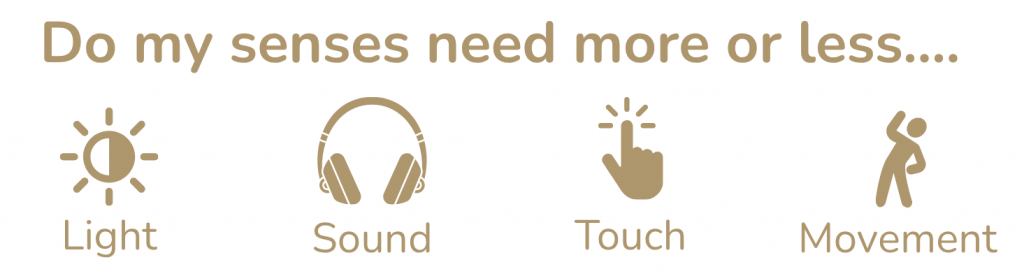
Do my senses need more or less… Light | Sound | Touch | Movement
Neurodivergent bodies are deeply affected by sensory input. During recovery, your senses may be more sensitive than usual. It’s important to check in and adjust your environment. For example, natural light feels empowering when I’m regulated, but when I’m stressed, even sunlight is too much. Sensory needs change constantly and are unique to each person, so it’s a good habit to get used to adjusting your environment as needed.
Here are the questions I ask myself when I am checking in on my sensory needs:
- Light: “Does my head hurt? Let me try changing the light.”
- Sound: “Do I feel upset? Let’s try changing the noise level.”
- Touch: “Does my body ache? I can try giving myself a massage.”
- Movement: “When was the last time I moved or stretched?”
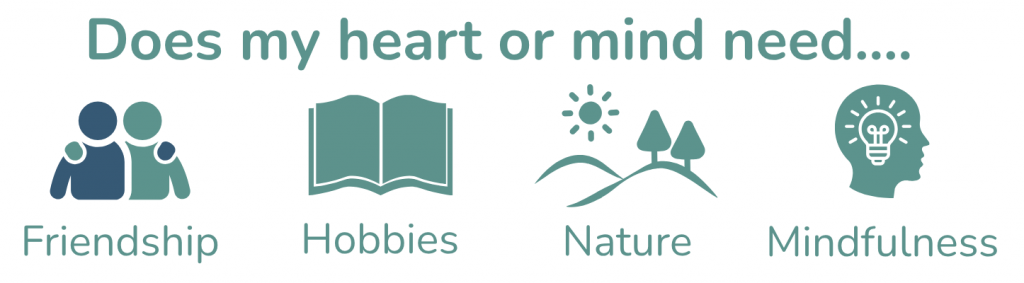
Do my heart or mind need more or less… Friendship | Hobbies | Nature | Mindfulness
These reminders help me reconnect with myself and others. Sometimes I don’t realize how long it’s been since I talked to my best friend or engaged in a hobby. These activities restore your sense of safety and help your body re‑engage with movement and tasks. Your body needs to gently “re-activate” and get used to interacting with the outside world again. When in the middle of a crisis, I don’t realize how long I’ve been stuck with only racing thoughts as my company. It’s a certain kind of exhausting to re-introduce yourself to the world.
Here are the questions I ask myself when I am checking in on my emotional and mental health needs:
- Friendship: “When was the last time I messaged my friend?”
- Hobbies: “When was the last time I have done a hobby?”
- Nature: “When was the last time I spent time in nature?”
- Mindfulness: “When was the last time I tried mindfully being in the present?”
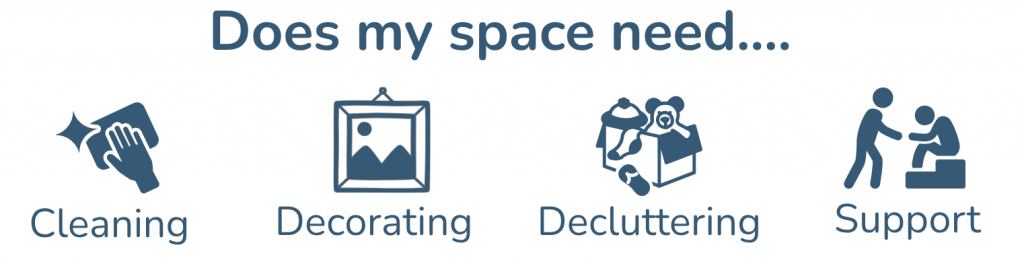
Does my space need… Cleaning | Decorating | Decluttering | Support
Your environment affects your senses every day. A messy or chaotic space can undo progress and increase stress. You don’t need to clean everything at once — start small. Preparing your space is an act of self‑care and helps future stressful moments feel more manageable. But beyond that, this is you creating the environment you want to live in. We deserve to feel refreshed when you go home to rest. Managing your space is investing in your health.
Here are the questions I ask myself when I am checking in on my space needs:
- Cleaning: “Is my space clean? Let’s start with one room.”
- Decorating: “What change can I make to feel safe here?
- Decluttering: “How can I reduce the size of things I need to clean?”
- Support: “Do I need to check in with family or roommates I live with?”

Recovery isn’t a race.
It’s a continuous check‑in you return to whenever you need guidance. Self‑care is how you help your body return to baseline so you don’t risk a meltdown or burnout.
Your body remembers how you treat it. Just as it can forget hunger cues, it can forget how to communicate its needs — but you can rebuild that trust through consistent care. It’s not easy re-building your body’s signals once they give up, but it is possible through consistency.
Taking care of yourself isn’t selfish. It’s how you move from surviving to thriving.
I know it can feel hopeless, but our community is cheering you or your loved ones on!